
The air receiver tank is the most consistently under-estimated component in any industrial compressed air system — and the most consequential one to size incorrectly. An under-sized receiver forces compressors into rapid load-unload cycles that accelerate mechanical wear, inflate energy consumption, and produce the pressure instability that disrupts downstream pneumatic processes and reduces product quality. An over-specified receiver wastes capital and floor space while delivering no meaningful operational benefit over a correctly sized vessel.
ASG Energy Solutions Pvt Ltd, based in Ashwathnagar, Bangalore, has been designing, supplying, and commissioning complete compressed air systems — including correctly sized air receiver tanks — since 2002. As the authorised Atlas Copco partner in Bangalore and exclusive CALMS System representative in India, they bring 24+ years of application engineering experience, 500+ completed projects across India, and ISO 50001-aligned system design methodology to every receiver tank specification and installation they undertake.
This 2026 guide covers everything Bangalore’s plant engineers, factory managers, and procurement teams need to know about air receiver tanks — from fundamental engineering principles through IBR and Factories Act compliance, correct sizing methodology, installation safety requirements, condensate management, and the real-world cost impact of getting the receiver specification right. The article complements ASG Energy Solutions’ wider compressed air expertise and is designed to help industrial buyers make informed decisions before committing capital expenditure.
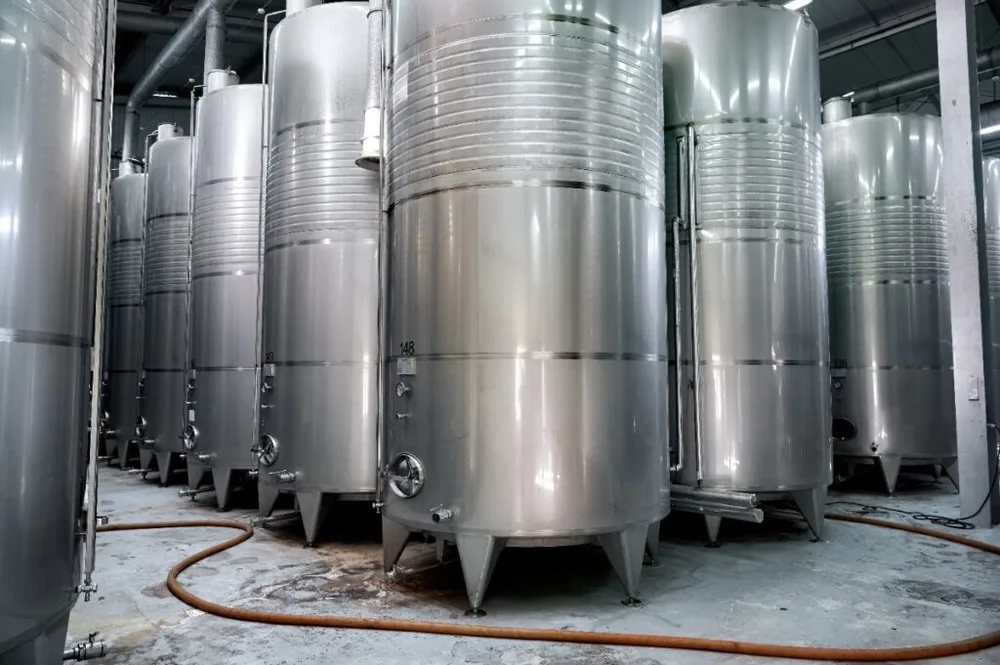
An air receiver tank — also referred to as a compressed air vessel, pressure receiver, or compressed air storage tank — is a pressure vessel installed in the compressed air system to store compressed air between the compressor discharge point and the downstream distribution network. It serves as a hydraulic capacitor for the pneumatic system, absorbing demand surges, smoothing pressure fluctuations, and providing the compressed air reserve that prevents the compressor from cycling continuously in response to every minor variation in plant air demand.
Without an adequately sized receiver tank, a fixed-speed compressor must load and unload repeatedly in direct response to every demand fluctuation in the system. Each load-unload transition subjects the drive motor, screw element, oil separator, and control valves to combined thermal and mechanical stress that is entirely distinct from the stress of continuous running. Industry evidence consistently shows that excessive load-unload cycling — defined as more than six complete cycles per hour — reduces rotary screw compressor service life by 30 to 45 per cent compared to systems where a correctly sized receiver buffers demand sufficiently to keep cycling rates within the manufacturer’s specification.
Air receiver tanks serve a second critical function that is frequently overlooked in system design: they allow entrained moisture and residual oil aerosol to condense and settle out of the compressed air stream before it reaches the downstream dryer and distribution system. The larger volume and cooler wall temperature of the receiver vessel create conditions for significant initial moisture separation — reducing thermal and moisture loading on the refrigeration dryer, improving drying efficiency, and extending dryer component service life without any additional energy input.
The engineering physics of an air receiver tank is grounded in Boyle’s Law: at constant temperature, the pressure of a fixed volume of gas is inversely proportional to its volume, meaning a larger receiver stores proportionally more compressed air at a given pressure. The practical implication is that a larger receiver provides a greater reserve of compressed air between the compressor’s upper cut-out pressure and the lower cut-in pressure, allowing demand to be met from stored air for longer before the compressor is required to restart. Maximising this stored reserve — within practical size and cost limits — is the objective of correct receiver sizing.
In a fixed-speed load-unload controlled compressor system, the receiver tank directly determines the length of each unload period and therefore the number of start cycles per hour. A receiver that allows the system pressure to hold above the cut-in setpoint for three minutes before the compressor restarts produces six starts per hour — the commonly accepted upper limit for rotary screw compressors. A receiver half that size produces twelve starts per hour, doubling the mechanical stress on every start-related component and cutting the compressor’s realistic service life roughly in half. This relationship is the primary engineering argument for investing in correctly sized receiver capacity.
For VSD+ compressors from the Atlas Copco GA range, the receiver tank plays a different but equally important supporting role. VSD+ compressors modulate speed rather than cycling on and off, so they do not have a start frequency constraint in the same way as fixed-speed machines. However, the receiver volume determines the system capacitance that allows the VSD+ drive to modulate smoothly within its efficient operating band. An under-sized receiver with a VSD+ compressor creates rapid small pressure oscillations that force the drive into fast, repetitive speed corrections — a condition called hunting that reduces motor efficiency and increases harmonic distortion in the facility’s electrical supply.
The industry best practice for larger compressed air systems uses two receiver vessels in different positions within the system to maximise both efficiency and air quality. The wet receiver is installed immediately after the compressor discharge, before the air dryer. It receives hot, saturated compressed air from the compressor and allows significant moisture condensation as the air cools against the cooler vessel walls — providing both thermal buffering and preliminary moisture separation that reduces the moisture load on the downstream refrigeration dryer by 30 to 50 per cent in typical Bangalore ambient conditions.
The dry receiver is installed downstream of the air dryer and acts as the primary demand buffer for the distribution network. Because the air in the dry receiver has already been treated to the required pressure dew point by the upstream dryer, demand peaks are met with air of consistent quality — there is no risk of wetter, undried air entering the network during peak demand events, as would occur if a single large wet receiver were used as the only buffer. The two-receiver arrangement therefore simultaneously optimises system pressure stability, dryer efficiency, and downstream air quality at modest additional capital cost.
Air receiver tanks are available in several configurations, each suited to specific installation environments, capacity requirements, and pressure ratings. The choice of receiver type is determined by the available installation footprint, the ceiling height, the required storage capacity, the system working pressure, and the specific application — whether the receiver is serving as a wet buffer immediately after the compressor or as a dry distribution reservoir downstream of the dryer. ASG Energy Solutions specifies and supplies Atlas Copco receiver tanks across the full type range as part of complete system design and installation.
Vertical receivers are the most commonly installed type in Bangalore’s industrial facilities, combining a compact footprint with the inherent advantage that condensate naturally drains to the lowest point of the vessel — directly to the drain fitting — under gravity. This simplifies condensate management and makes automatic drains easier to position and maintain. Vertical receivers from the Atlas Copco standard range are available from 50 litres to several thousand litres and are suited to the large majority of industrial compressed air applications in Karnataka’s manufacturing sector.
Horizontal receivers are specified where building headroom is restricted or where outdoor installation on a concrete pad is preferred. They provide excellent stability without the need for elevated support frames, and their lower centre of gravity simplifies seismic anchoring in facilities where seismic zone compliance is required. The Atlas Copco HTA high-pressure receiver — designed and certified to CE 97/23 and ASME Section VIII Division 3 — represents the speciality end of the range, supporting design pressures up to 45 bar and design temperatures from minus 10 to plus 55 degrees Celsius for high-pressure instrument air, breathing air, and speciality gas storage applications.
Tank Type | Orientation / Config | Typical Capacity | Best Application | Key Advantage |
Vertical Receiver | Upright, small footprint | 50 L to 5,000 L | General industrial; space-constrained plants | Minimal floor area; natural condensate drainage |
Horizontal Receiver | Horizontal, low headroom | 500 L to 10,000 L+ | Plants with low ceilings; outdoor installations | Stable base; easier inspection access |
Wet Receiver | Post-compressor, pre-dryer | Sized to compressor FAD | Initial moisture separation, thermal buffering | Reduces dryer load; cools discharge air |
Dry Receiver | Post-dryer, pre-distribution | Sized to peak demand | Clean air buffer for distribution network | Stable pressure at point of use |
High-Pressure Receiver (HTA) | Vertical or horizontal | Up to design pressure of 45 bar | High-pressure process and instrument air | Energy storage for peak demand; avoids cycling |
Air receiver tank sizing is the technical exercise most frequently performed incorrectly — or not at all — in Bangalore’s industrial compressed air sector. The majority of under-sized receivers in the field exist because they were selected from a price list based on approximate compressor capacity rather than calculated from actual system demand data. Correct receiver sizing requires four inputs: the compressor’s free air delivery (FAD) in litres per second, the system working pressure, the allowable pressure differential between the upper and lower cut-in setpoints, and the maximum acceptable number of compressor starts per hour as specified by the manufacturer.
The primary engineering formula for sizing a receiver for a load-unload controlled fixed-speed compressor is: V equals the product of q, P1, and T-unload, divided by delta-P; where V is the required receiver volume in litres, q is the compressor FAD in litres per second, P1 is the absolute discharge pressure in bar, T-unload is the target minimum unload time in seconds, and delta-P is the pressure differential between load and unload setpoints in bar. For most industrial compressors, a target unload time of 60 to 180 seconds and a pressure differential of 1.0 to 1.5 bar produces receiver volumes that keep cycling within manufacturer limits throughout the full demand range from minimum to peak load.
As a practical benchmark, Atlas Copco recommends a minimum receiver volume of 6 to 10 litres per kilowatt of installed compressor power for standard load-unload controlled applications. A 37 kW compressor therefore requires a minimum receiver of 222 to 370 litres. Facilities with highly variable demand profiles — characteristic of automotive assembly lines, press shops, and food packaging operations — benefit from sizing at 15 to 20 litres per kW to provide adequate surge capacity during production peak events. VSD+ compressor systems require smaller receivers — typically 3 to 5 litres per kW — because the drive modulates speed to match demand rather than cycling on and off.
Rules of thumb provide a starting point, but accurately sizing a receiver for a specific facility requires the on-site demand survey that ASG Energy Solutions conducts as part of every new compressed air system design engagement. A demand survey instruments the compressed air system over a representative operating period — capturing peak demand, average demand, minimum demand, and the rate of demand change during production transitions including shift start-up and tool-commissioning peaks. This data allows precise calculation of the receiver volume required to maintain stable pressure throughout all operating conditions, including shift start-up demand surges that are typically 40 to 80 per cent higher than steady-state demand in Bangalore’s manufacturing sector.
In India, compressed air receiver tanks operating above specified pressure and capacity thresholds are classified as unfired pressure vessels and are subject to mandatory statutory compliance requirements under the Factories Act 1948 and the associated Static and Mobile Pressure Vessels (Unfired) Rules, 1981, as adopted by Karnataka state. Any vessel operating at gauge pressures above 1 kilogram per square centimetre and with internal volume above 10 litres falls within the statutory definition — thresholds that every industrial air receiver tank exceeds. Non-compliant pressure vessels discovered during factory safety inspections can result in mandatory production shutdown notices, financial penalties, and in cases involving injury, criminal liability for the employer.
The primary Indian standard governing the design and manufacture of unfired pressure vessels is IS 2825 — Code for Unfired Fusion Welded Pressure Vessels. Receivers manufactured to IS 2825 must carry a permanent identification plate recording the standard number, maximum allowable working pressure (MAWP), hydrostatic test pressure, year of manufacture, vessel serial number, and manufacturer identification. Atlas Copco’s receiver tanks are additionally certified to the European Pressure Equipment Directive (CE 97/23 / PED 2014/68/EU) and, for the high-pressure HTA range, to ASME Section VIII Division 3 — international standards that substantially exceed IS 2825 minimum design and testing requirements.
Under the Factories Act and the Karnataka State Rules made thereunder, every compressed air receiver must be examined by a competent person — typically a Chartered Industrial Inspector (CIB) or an inspector appointed under the State Factories Act — at intervals not exceeding 24 months for external examination and not exceeding four years for complete internal inspection with thickness measurement and, where required, hydrostatic pressure testing. The results of every inspection must be recorded in the Register of Vessels under Pressure (Form 9) and retained on site for production during any factory inspection. Many Bangalore SMEs operating under growth pressures — particularly in Peenya, KIADB, and Bommasandra industrial areas — allow these statutory inspection records to lapse, creating regulatory risk that cannot be remediated retrospectively.
An air receiver tank requires specific safety fittings that are both mandatory under Indian statutory requirements and critical to safe and reliable operation. The primary mandatory fitting is a calibrated pressure gauge mounted in a position clearly visible to the operator, with a full-scale range appropriate to the system — typically 0 to 1.5 times the maximum working pressure. The gauge provides the operator’s primary means of verifying that system pressure is within the safe operating envelope and must be replaced or recalibrated immediately if found to be reading incorrectly or showing signs of mechanical damage.
A safety relief valve is mandatory on every compressed air receiver, and must be sized to discharge the full compressor output capacity if the system control malfunctions and allows pressure to rise unchecked. Safety valves must be set to open at a pressure not exceeding the vessel’s MAWP, must be of an approved type certified for compressed air service, and must be periodically tested — by briefly lifting the test lever against working pressure — to verify that the valve seat has not corroded or seized in the closed position. Unauthorised tampering with, blanking off, or gagging of safety relief valves is a serious offence under Section 31 of the Factories Act 1948 that can result in prosecution of both the employer and the person performing the modification.
A functional condensate drain is the third mandatory fitting on every compressed air receiver. Compressed air always carries entrained water vapour that condenses in the cooler receiver vessel, and this condensate accumulates at the lowest point of the vessel. Unmanaged condensate reduces effective receiver volume as it displaces stored air, promotes accelerating internal corrosion through wet-dry cycling, and risks liquid water carry-over into the distribution network during high-demand events. ASG Energy Solutions specifies and installs automatic zero-loss condensate drains — electronic timer-controlled or demand-activated — on every receiver tank they commission, eliminating both manual drain maintenance requirements and the compressed air waste of continuous timed drains.
ASG Energy Solutions treats air receiver tank sizing as an inseparable part of complete compressed air system design — not as a separate item specified after the compressor has already been selected and ordered. The compressed air demand survey that forms Stage 1 of their five-stage system design methodology generates the demand profile data that is the primary input to both compressor sizing and receiver sizing simultaneously. This integrated approach ensures that the receiver and compressor are sized as a tuned system, with the receiver volume specifically calculated to hold cycling rates within the manufacturer’s specification across the full range of demand conditions the facility experiences throughout its working week.
The company’s 24+ years of compressed air system design experience in Karnataka’s diverse industrial sector has built an application knowledge base that extends well beyond textbook formulae. Automotive assembly lines, for example, generate characteristically sharp, high-amplitude demand spikes during simultaneous multi-tool operation that benefit from larger receiver volumes as the primary response mechanism. Continuous-duty conveying systems, by contrast, are better served by VSD+ compressor modulation than by additional receiver capacity. Batch process facilities — common in Bangalore’s food and pharmaceutical sectors — present a third demand profile where a large dry receiver combined with a relatively small compressor is more cost-effective than a larger compressor alone.
Post-commissioning monitoring through ASG Energy Solutions’ CAEMS platform tracks receiver tank pressure as a continuous variable across all operating shifts. CAEMS trend analysis identifies gradual reduction in the inter-cycle dwell time — an early indicator that either demand has grown beyond the receiver’s designed capacity, or that air leaks have increased total system load. This continuous intelligence allows ASG Energy Solutions to recommend proactive receiver capacity additions or leak repair programmes before efficiency loss becomes a quantifiable operational cost for the facility.
Different industries operating across Bangalore’s industrial zones have specific and sometimes regulatory-driven requirements for compressed air receiver tanks that go beyond standard commercial specifications. The correct receiver configuration for a pharmaceutical cleanroom system is fundamentally different from the correct specification for an automotive press shop or a food packaging line. ASG Energy Solutions’ sector experience across 500+ projects in India provides the application-specific knowledge base needed to specify receiver tanks that meet both engineering requirements and applicable regulatory obligations in each sector.
Automotive manufacturing facilities in Peenya, Bommasandra, and Nelamangala typically operate multi-compressor installations with large receiver banks sized to absorb the surge demand of simultaneously operated pneumatic tools on final assembly lines. Receiver tanks in automotive applications must be positioned within the compressed air room in configurations that allow straightforward inspection access, as Tier 1 automotive suppliers are frequently subject to compressed air quality audits from global OEM customers who specify requirements for documented pressure vessel compliance as a condition of supply certification. ASG Energy Solutions has designed and commissioned multiple large-scale receiver installations at automotive component manufacturers throughout Bangalore’s automotive corridor.
Pharmaceutical manufacturing and food processing facilities in Bommasandra EPIP Zone and along the Hosur Road corridor require receiver tanks positioned downstream of validated oil-free compressors and drying systems — serving as dry air buffers whose internal surfaces must not introduce contamination into the validated clean air stream. All materials in contact with the compressed air in pharmaceutical and food-grade applications must comply with relevant FSSAI and GMP material safety requirements. Atlas Copco receiver tanks supplied through ASG Energy Solutions are constructed of carbon steel with internal epoxy or stainless steel options for critical clean-air applications.
Condensate accumulation in compressed air receiver tanks is an unavoidable physical consequence of the compression process and Bangalore’s year-round ambient humidity. When hot, saturated compressed air cools inside the receiver vessel, moisture that was held in vapour form condenses into liquid water and settles at the vessel’s lowest point. In a typical 37 kW compressor installation operating in Bangalore’s moderate humidity environment, a wet receiver can accumulate 2 to 6 litres of condensate per hour depending on ambient dew point conditions, compressor loading, and the temperature differential between the compressed air discharge and the receiver vessel wall.
Manual condensate drains require a trained operator to open the drain valve at regular intervals — typically each shift — and allow accumulated condensate to discharge before closing the valve again. Manual drains are the most common arrangement in smaller installations and are fully adequate when operated consistently, but they depend entirely on operator discipline and are frequently neglected in busy production environments. When manual drains are not operated regularly, condensate builds up, reduces effective receiver volume, accelerates internal corrosion, and eventually risks liquid water carry-over into the distribution pipework — leading to water accumulation in dryers, filters, and end-use equipment that causes corrosion damage far more expensive than the condensate drain fitting itself.
Automatic condensate drains eliminate the dependency on operator intervention by discharging condensate on a timed or demand-actuated basis without manual attention. Timer-controlled automatic drains open for a set duration at fixed intervals, discharging condensate along with a quantity of compressed air — this air loss is the main disadvantage of timer drains and can represent 1 to 3 per cent of total compressor output in poorly adjusted systems. Demand-actuated zero-loss drains use a float or electronic sensor to open only when liquid condensate is present, discharging the liquid without wasting compressed air. ASG Energy Solutions specifies and installs zero-loss demand drains on all receiver vessels they commission as part of a complete compressed air system installation, eliminating both management overhead and air waste from condensate drain operation.
Air receiver tanks are pressure vessels operating continuously at elevated pressure in industrial environments, and they require systematic maintenance and statutory inspection to remain safe and compliant under India’s Factories Act requirements. Unlike compressors that give clear performance indicators when maintenance is overdue — rising temperatures, falling output, increased noise — a receiver tank can develop internal corrosion, pitting, or fitting degradation that is invisible from outside the vessel until it creates a safety event. Regular inspection by a competent person is not a bureaucratic formality: it is the primary safeguard against the catastrophic consequences of pressure vessel failure.
External inspection — conducted at intervals not exceeding 24 months under Karnataka Factories Act requirements — focuses on the external condition of the vessel shell, including corrosion, pitting, and coating condition; the condition of all fittings, connections, and flanges; the operation and calibration status of the pressure gauge; the function of the safety valve; and the operation of the condensate drain. The inspector records findings in Form 9 of the Register of Vessels under Pressure and specifies the date of the next required inspection. This record must be retained on-site and presented on demand to the factory inspector.
Internal inspection — required at intervals not exceeding four years — involves entry into the receiver vessel by a competent inspector to examine the internal shell surface for corrosion, pitting, stress cracking, and weld condition. Where significant metal loss is detected, ultrasonic thickness measurement quantifies the remaining wall thickness and determines whether the vessel is safe to continue operating at its rated MAWP or must be de-rated or removed from service. ASG Energy Solutions can advise on scheduling and facilitating the statutory inspections required for all receiver vessels they supply and commission, and can connect clients with certified competent inspectors in Bangalore for ongoing compliance management.
Frequency | Inspection or Service Task | Standard / Regulatory Basis |
Daily | Manual condensate drain check (if auto drain fitted, verify discharge) | Factories Act Schedule — operator duty |
Weekly | Pressure gauge reading verification; safety valve visual check | IS 2825; Factories Act Section 31 |
Monthly | Condensate drain function test; all fittings and connections check | Atlas Copco AMC schedule; IS 2825 |
6-Monthly | Safety valve lift test; pressure gauge calibration check | Static and Mobile Pressure Vessels Rules 1981 |
Annual / Biennial | External inspection by competent person; corrosion assessment; paint and coating condition | Karnataka Chief Inspector of Factories; Form 9 record |
Every 4 Years | Internal inspection by competent person; thickness measurement; hydrostatic test if required | IS 2825; Static Pressure Vessels Rules 1981; Factory Inspector requirement |
An air receiver tank does not function as a standalone component — it performs as an integrated element within a complete compressed air system whose efficiency depends on the correct specification and sequencing of every component in the chain. The interaction between the compressor, receiver, dryer, filtration system, and distribution piping determines the overall energy efficiency, air quality, and pressure stability that the facility’s downstream processes experience. ASG Energy Solutions designs complete systems as integrated packages, ensuring that each component is sized and positioned in relation to every other component in the chain rather than specified in isolation.
The receiver tank’s position in the system relative to the air dryer has significant implications for both air quality and system efficiency. Positioning a large wet receiver before the dryer takes advantage of the receiver’s thermal mass to provide pre-cooling and initial moisture separation, reducing the dryer’s peak thermal load and improving dew point stability. The refrigeration dryer then processes air that has already surrendered much of its entrained moisture, operating more efficiently and maintaining a more consistent outlet dew point across the range of system demand conditions. A dry receiver positioned after the dryer ensures that distribution pressure stability is maintained without risk of re-introducing moisture from a hot, undried buffer vessel.
ASG Energy Solutions’ CAEMS monitoring platform extends the performance of every component in the complete system by providing continuous, real-time data on receiver pressure, compressor loading, dryer outlet dew point, and distribution network pressure at multiple measurement points. CAEMS trend analysis detects receiver-specific performance degradation — such as reduced dwell time between compressor cycles, which may indicate increased air leakage or growing demand — and generates automated alerts that allow the ASG service team to intervene proactively. This integration of intelligent monitoring with correctly specified hardware is the foundation of the ISO 50001-aligned compressed air management capability that distinguishes ASG Energy Solutions from conventional equipment suppliers in Bangalore.
The most prevalent operational problems associated with air receiver tanks in Bangalore’s industrial sector arise from three root causes: incorrect initial sizing, neglected condensate management, and deferred statutory inspection. Understanding these failure modes — and the straightforward preventive measures that eliminate them — is the difference between a receiver tank that performs reliably for 20+ years and one that becomes a source of compressor damage, air quality failures, and regulatory liability within five years of installation.
Rapid compressor cycling — the most direct consequence of receiver under-sizing — is frequently misdiagnosed as a compressor fault rather than a system design problem. Plant maintenance teams experiencing excessive compressor motor starts, premature motor winding failures, and increased oil carry-over should evaluate receiver adequacy before assuming the compressor itself is defective. Adding receiver capacity is almost always less expensive than replacing prematurely worn compressor components, and the engineering improvement is permanent rather than symptomatic. ASG Energy Solutions’ energy audit service specifically assesses receiver adequacy as part of its compressed air system performance review.
Internal corrosion from unmanaged condensate is the most common cause of premature receiver vessel failure and the most common finding during statutory internal inspections of vessels operated without functional condensate drains. A receiver operating in Bangalore’s humid climate without an effective condensate drain can develop measurable internal corrosion in as little as 18 to 24 months of operation. In severe cases, pitting corrosion can penetrate the vessel wall within five years, creating both an uncontrolled pressure leak risk and a statutory compliance violation requiring immediate vessel decommissioning. The preventive investment in a quality automatic condensate drain is a fraction of the cost of premature vessel replacement.
The financial case for correctly sized air receiver tanks extends across three value streams: reduced energy consumption from lower cycling losses, extended compressor service life from reduced start-stop mechanical stress, and avoided unplanned downtime costs from pressure instability and compressor failures. When these three streams are quantified over a ten-year system life, the incremental capital cost of correct receiver sizing — typically Rs. 30,000 to Rs. 1.5 lakh depending on vessel size and specification — delivers a return that is measurable in multiples of the investment.
Energy savings from correct receiver sizing arise because fixed-speed compressors consume approximately 15 to 25 per cent of their rated power while running unloaded — the period between the upper cut-out pressure and the lower cut-in pressure. Every additional second of unload time provided by a larger receiver is a second in which the compressor runs at partial load rather than restarting at full load. For a 37 kW compressor running two shifts per day at BESCOM HT tariff rates, reducing the cycling rate from 15 starts per hour to 5 starts per hour through correct receiver sizing can reduce annual energy consumption by 8 to 12 per cent — representing Rs. 90,000 to Rs. 1.8 lakh per year in electricity savings from a capital investment in additional receiver capacity that may have cost Rs. 80,000 to Rs. 1.2 lakh.
Compressor service life extension is the second major financial benefit. Rotary screw compressor elements and motor windings are rated for a maximum number of start cycles across the equipment life — typically specified by Atlas Copco as a maximum of six starts per hour for GA series compressors. Operating consistently above this limit invalidates the manufacturer’s service life projections and accelerates wear on every start-related component: motor windings, starting contactors, shaft seals, and the oil film that protects screw element rotors during the transient period of each start. ASG Energy Solutions’ experience across 500+ projects confirms that facilities with correctly sized receivers consistently achieve or exceed rated compressor service life, while facilities with under-sized receivers often face major compressor overhauls five to seven years ahead of schedule.
Parameter | Under-Sized Receiver | Correctly Sized Receiver | Over-Sized Receiver |
Load-Unload Cycles per Hour | 15-30+ cycles (damaging) | 4-6 cycles (optimal) | 1-2 cycles (acceptable) |
Compressor Motor Wear Rate | High (frequent starts) | Normal (design life) | Low |
Pressure Stability at Demand | Poor — frequent drops below setpoint | Good — demand met within pressure band | Excellent — but wasteful |
Annual Energy Overhead | Up to 12% higher (cycling losses) | Baseline — optimised | Capital cost wasted; energy neutral |
Compressor Overhaul Interval | 30-45% shorter than rated life | At rated service life | At or beyond rated service life |
Indicative Extra Cost (10yr, 37kW) | Rs. 18-28 lakh extra | Baseline (optimised TCO) | Rs. 2-4 lakh excess capital only |
ASG Energy Solutions Pvt Ltd is uniquely positioned as Bangalore’s compressed air system integrator of choice for air receiver tank supply, sizing, and installation. As the authorised Atlas Copco partner in Bangalore, they have direct access to the full Atlas Copco range of standard and high-pressure receiver tanks — IS 2825-compliant, CE-certified, and manufactured to tolerances that significantly exceed the minimum requirements of the Indian standard. Every Atlas Copco receiver tank they supply comes with the full manufacturer’s documentation required for IS 2825 compliance, Karnataka Factories Act registration, and Form 9 records from day one.
The CAEMS monitoring platform — exclusive to ASG Energy Solutions as the sole India representative of CALMS Systems — extends the value of every receiver installation by providing continuous, real-time pressure monitoring and trend analysis. No other compressed air supplier currently operating in Bangalore can offer this level of post-commissioning intelligence for receiver tank performance. For Bangalore’s larger industrial facilities managing multiple compressed air systems across an expanding production floor, CAEMS provides the system-wide visibility needed to identify receiver adequacy issues, detect growing air leakage, and maintain ISO 50001 energy management compliance across the complete compressed air infrastructure.
The free energy audit consultation that ASG Energy Solutions offers to prospective clients is the starting point for every successful receiver tank specification. Rather than recommending a standard-size receiver from a catalogue, their engineers invest in understanding the facility’s actual demand profile, its existing receiver capacity, the condition of its current pressure vessels, and its compliance status under the Factories Act. This diagnostic approach — grounded in 24+ years of Karnataka industrial experience and 500+ completed projects across India — ensures that every receiver tank specification is the right technical and commercial decision for the specific facility, not a generic approximation. Contact ASG Energy Solutions at their Ashwathnagar, Bangalore office to begin the consultation.
The correct receiver size depends on your compressor’s free air delivery, the working pressure, the allowable pressure differential, and the maximum permitted number of starts per hour as specified by the compressor manufacturer. A practical starting point is 6 to 10 litres per kW of installed compressor power for fixed-speed load-unload controlled machines — so a 37 kW compressor requires a minimum of 222 to 370 litres of receiver capacity. For accurate sizing specific to your facility’s actual demand profile, ASG Energy Solutions offers a free on-site demand survey and receiver sizing calculation as part of their compressed air system design service.
An air receiver tank is not legally mandated for every compressed air installation, but it is strongly recommended from both technical and economic standpoints for any fixed-speed compressor system. Without a receiver, the compressor cycles at the full rate of demand variation — a mode of operation that substantially shortens service life and increases energy consumption. For VSD+ compressors, a receiver provides system capacitance that enables stable speed modulation. Once installed, a receiver that meets the thresholds of the Static and Mobile Pressure Vessels (Unfired) Rules 1981 — above 1 kg/cm2 and 10 litres internal capacity — becomes a statutory pressure vessel subject to Factories Act compliance requirements.
A wet receiver is positioned after the compressor and before the air dryer, receiving hot, moisture-laden compressed air from the compressor discharge. Its function is to buffer compressor output, allow initial moisture condensation as the air cools, and reduce the thermal load on the downstream dryer. A dry receiver is positioned after the air dryer and before the distribution network, storing pre-dried air at the required dew point as a distribution buffer. Best practice for larger systems uses both: a wet receiver to protect the dryer from peak thermal loads, and a dry receiver to provide stable, high-quality air supply to the distribution network during demand surges.
Compressed air receivers in Bangalore must comply with the Factories Act 1948 and the Static and Mobile Pressure Vessels (Unfired) Rules 1981 as adopted in Karnataka. Requirements include manufacturing to IS 2825 or equivalent international standard, registration with the Karnataka Chief Inspector of Factories, mandatory external inspection by a competent person at intervals not exceeding 24 months, internal inspection at intervals not exceeding four years, and maintenance of Form 9 inspection records on site. All receivers must carry a permanent identification plate and be fitted with a calibrated pressure gauge, safety relief valve, and functional condensate drain as mandatory fittings.
Under Karnataka Factories Act requirements, the mandatory inspection frequencies are: external examination by a competent person not less than every 24 months, and internal inspection — including thickness measurement and weld condition assessment — not less than every four years. In addition to these statutory inspections, a qualified operator should visually check the pressure gauge reading, condensate drain operation, and safety valve condition weekly, with a formal monthly check of all fittings and connections. ASG Energy Solutions’ Annual Maintenance Contract programme includes all scheduled maintenance activities and can facilitate the statutory competent person inspections required under the Factories Act.
Yes. As the authorised Atlas Copco partner in Bangalore, ASG Energy Solutions supplies the full range of Atlas Copco air receivers — including standard vertical and horizontal tanks and the HTA high-pressure receiver range — as part of complete compressed air system design and installation engagements. All Atlas Copco receivers come with the full manufacturer’s documentation required for IS 2825 compliance and Karnataka Factories Act registration. ASG Energy Solutions also provides expert sizing calculations, correct system positioning (wet or dry receiver), safety fitting specification, installation, commissioning, and post-commissioning CAEMS monitoring for every receiver tank system they deliver.
Neglected maintenance and inspection of compressed air receiver tanks creates risk across three dimensions: operational, financial, and legal. Operationally, unmanaged internal corrosion can lead to vessel failure — a high-pressure event with serious potential for injury and structural damage to the surrounding plant. Financially, a corroded vessel that fails a competent person inspection must be decommissioned immediately, triggering unplanned capital replacement cost and production downtime. Legally, operating a pressure vessel without valid inspection certification under the Factories Act exposes the employer to enforcement action, financial penalties, and — in the event of an injury — potential criminal prosecution. None of these risks is proportionate to the straightforward cost of scheduled inspection and maintenance.
Get Expert Air Receiver Tank Sizing and Installation in Bangalore
ASG Energy Solutions Pvt Ltd has designed, supplied, and commissioned complete compressed air systems — including correctly sized, fully compliant air receiver tanks — for Bangalore’s industrial sector since 2002. As the authorised Atlas Copco partner in Bangalore and exclusive CALMS System representative in India, they deliver receiver tank solutions that are correctly sized from site demand survey data, manufactured to IS 2825 and CE standards, fully documented for Karnataka Factories Act compliance, and supported by post-commissioning CAEMS monitoring for continuous performance visibility.
Whether you need a new compressed air system with correctly sized wet and dry receivers, an assessment of whether your existing receiver is adequate for your current production demand, assistance with statutory Factories Act inspection compliance, or an energy audit that identifies receiver-related cycling losses in your facility, ASG Energy Solutions has the expertise and Atlas Copco product access to resolve it effectively.
Contact ASG Energy Solutions today for a free energy audit consultation and compressed air system assessment. Their Ashwathnagar, Bangalore office is open Monday to Saturday and serves industrial clients throughout Karnataka.
Looking for reliable industrial energy solutions? Reach out to ASG Energy Solutions Pvt. Ltd. for expert guidance, tailored project support, and top-quality products that drive performance and efficiency. Whether you need advanced air compressors, leak detection systems, or custom maintenance services, our team is ready to assist you. We prioritize your business needs with fast response times, professional service, and long-term support. Get in touch today and discover how we can power your operations with confidence.




ASG Energy Solutions Pvt. Ltd. is committed to continuous improvement and driving innovation in our services. We proudly offer specialized project and maintenance solutions, including:

© 2026 ASG Energy Solutions Pvt Ltd | All Rights Reserved | Website Developed by EchoPx.com
ASG Energy Solutions Pvt Ltd
Typically replies within minutes
Any questions related to Air Receiver Tanks in Bangalore?
WhatsApp Us
🟢 Online | Privacy policy
