Atlas Copco Authorized Partner since 2002

Screw Air Compressor in India – Industrial Rotary Screw Compressors for Reliable and Energy-Efficient Manufacturing

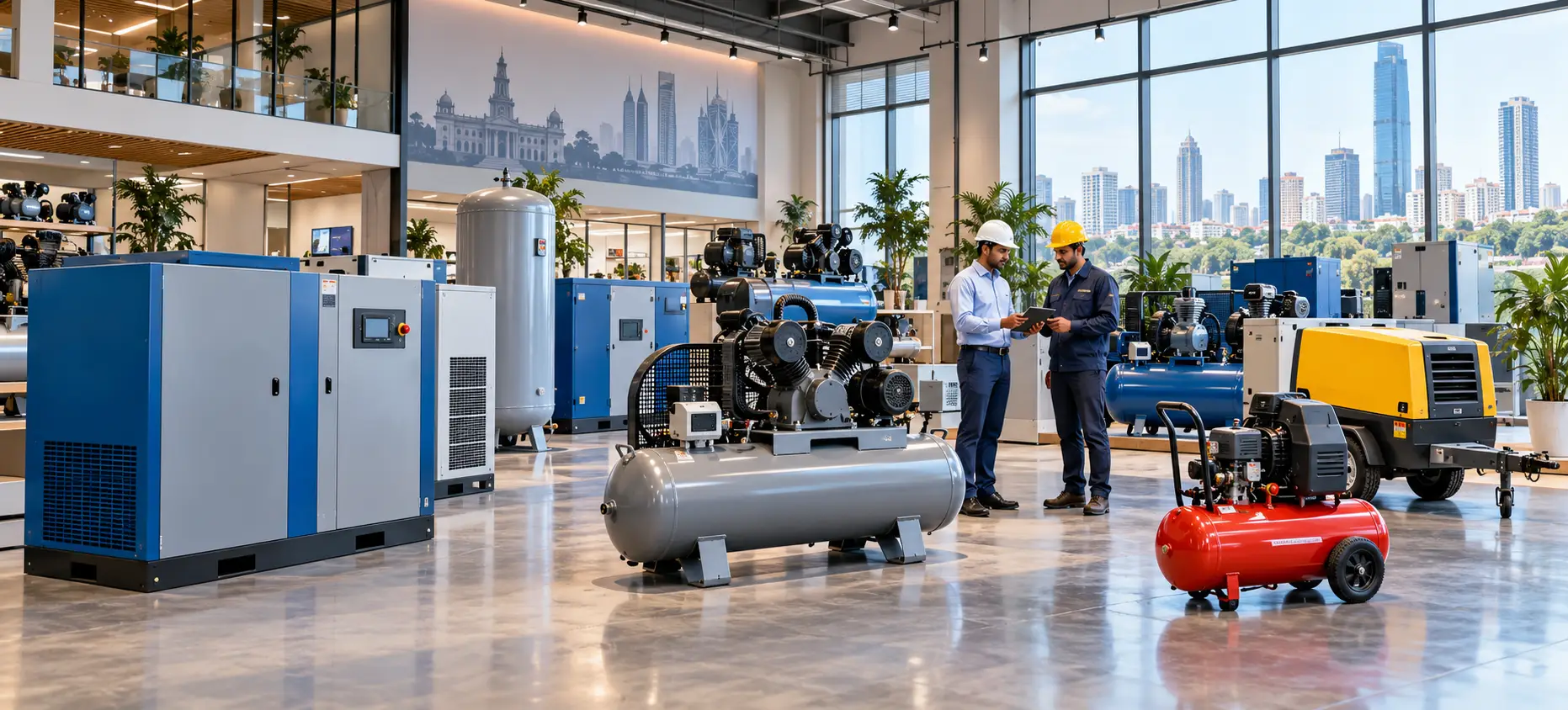
Industrial screw air compressor supplied by ASG Energy Solutions, Bangalore

High-Performance Screw Air Compressors and Atlas Copco Rotary Screw Compressor Solutions from ASG Energy Solutions

  • Oil-injected and oil-free
  • Fixed-speed and VSD
  • Atlas Copco GA series
  • Dryers, filters and piping
  • Energy audits and leak detection
  • Genuine OEM spares and AMC

Request a Screw Compressor Quote

Share your airflow, pressure and operating hours for a specification-based quotation.

  • Atlas Copco authorized partner since 2002
  • 500+ projects delivered
  • Exclusive CALMS Systems India representative
20+Years as an authorized Atlas Copco partner
500+Projects delivered
2002Established, headquartered in Bangalore
CALMSExclusive Systems representative in India

A screw air compressor is one of the most widely used compressed air technologies in industrial manufacturing, delivering a dependable supply of pressurized air for machinery, production processes, pneumatic systems, and factory operations. Designed for applications requiring consistent airflow and reliable operation, industrial rotary screw compressors are used across automotive manufacturing, pharmaceutical production, food and beverage processing, cement plants, textile industries, metalworking facilities, and other industrial environments.

Selecting the correct rotary screw air compressor is essential for maintaining production efficiency, controlling electricity consumption, improving system reliability, and reducing long-term operating costs.

At ASG Energy Solutions Pvt. Ltd. (ASGESPL), we provide industrial screw air compressor systems and related compressed air solutions designed around the actual operating requirements of manufacturing and process industries.

Established in 2002 and headquartered in Bangalore, ASGESPL is an authorized Atlas Copco partner supplying and servicing industrial compressed air equipment across suitable applications in India.

Our compressed air solutions include oil-injected rotary screw compressors, oil-free compressor technologies, fixed-speed compressors, variable speed drive compressors, compressed air dryers, filtration systems, air receivers, piping networks, and maintenance support.

Whether your manufacturing facility requires a new industrial screw compressor, replacement of an inefficient compressor, expansion of an existing compressed air network, or a complete compressed air system, ASGESPL helps assess equipment requirements based on air consumption, operating pressure, production hours, compressed air quality, and energy efficiency objectives.

Looking for a screw air compressor in India? Contact ASGESPL for suitable Atlas Copco compressor models, technical information, system selection, and pricing.

What Is a Screw Air Compressor?

A screw air compressor is a type of positive displacement compressor that uses rotating screw-shaped rotors to compress air.

It is commonly referred to as a rotary screw compressor, screw type air compressor, or rotary screw air compressor.

The compressor contains a compression element with two meshing rotors. As these rotors turn, atmospheric air enters the compression chamber and moves through progressively smaller spaces, increasing its pressure.

The compressed air is then discharged into the downstream compressed air system.

Rotary screw compressors are widely used in industrial facilities because they can provide relatively steady airflow and are available in configurations suitable for extended operating periods.

Industrial screw compressors are selected for applications where manufacturing equipment requires a consistent supply of compressed air at an appropriate working pressure.

They may be used as standalone machines or integrated into larger compressed air systems containing dryers, receivers, filters, monitoring equipment, and distribution piping.

The selection of a screw compressor should consider the complete application rather than the compressor alone.

A properly engineered compressed air installation must deliver sufficient airflow at the correct pressure and air quality while avoiding unnecessary electricity consumption.

ASGESPL supports this approach by evaluating compressed air needs and identifying suitable Atlas Copco compressor technologies.

Why Screw Air Compressors Are Important for Modern Manufacturing

Compressed air is an important industrial utility used to operate machinery, pneumatic equipment, production lines, and selected process systems.

In manufacturing facilities, interruptions in compressed air supply can affect production efficiency, machine performance, and process continuity.

A correctly selected industrial screw air compressor provides compressed air according to the required operating conditions.

Unlike intermittent-duty compressor technologies, many rotary screw compressors are designed for sustained industrial operation.

Their performance and reliability depend on compressor sizing, system design, maintenance, air quality management, and environmental conditions.

Benefits of Industrial Screw Air Compressors

1Reliable Compressed Air Supply

Industrial rotary screw compressors are suitable for manufacturing environments requiring dependable compressed air delivery.

When correctly sized and maintained, they can support consistent operation of pneumatic machinery and factory equipment.

2Continuous Industrial Operation

Many screw compressor designs are suitable for prolonged operating periods.

This makes them relevant to production facilities with continuous shifts or extensive daily operating hours.

3Energy Efficiency

Energy-efficient screw compressor technologies can help control electricity consumption.

Variable speed drive models are especially useful for evaluating facilities with fluctuating compressed air demand.

4Stable Air Delivery

Rotary screw compressors produce relatively steady compressed air flow compared with the pulsating discharge associated with many reciprocating compressor designs.

This can benefit industrial systems requiring reliable pneumatic performance.

5Compact Equipment Configurations

Many modern industrial screw compressors are available in integrated, space-conscious configurations.

The exact footprint depends on the selected model and associated air treatment equipment.

6Suitable for Centralized Compressed Air Systems

Screw compressors can form part of centralized air networks supplying multiple manufacturing machines.

7Compatibility with Air Treatment Equipment

Industrial rotary screw compressor systems can be integrated with compressed air dryers, filtration, receivers, and condensate treatment equipment.

8Flexible Control Options

Depending on the model, screw compressors may use fixed-speed, load/unload, or variable-speed control technologies.

9Maintenance Planning

Scheduled servicing, genuine spare parts, suitable lubricants, and monitoring support can help maintain performance and reduce unexpected interruptions.

10Long-Term Operating Cost Management

A properly sized compressor, combined with system efficiency measures, can help reduce avoidable energy and maintenance costs.

Screw Air Compressor Working Principle – How Does a Rotary Screw Compressor Work?

Understanding the screw compressor working principle helps plant engineers evaluate equipment performance and maintenance requirements.

A rotary screw air compressor uses a pair of rotating helical rotors to draw in atmospheric air, compress it, and deliver it to the system.

The compression process takes place within the screw air end.

  1. Step 1: Atmospheric Air Intake

    Air enters the compressor through an inlet system.

    An intake air filter helps reduce the amount of airborne particulate matter entering the compression element.

    Intake air quality and filter condition can influence compressor performance.

  2. Step 2: Air Enters the Screw Element

    The compressor contains two intermeshing screw rotors.

    As the rotors rotate, air is trapped between the rotor profiles and the compressor housing.

    This forms the basis of the positive displacement compression process.

  3. Step 3: Air Compression

    As the trapped air moves through the screw element, the volume available to it decreases.

    This reduction in volume increases the pressure of the air.

    The required operating pressure is determined by the compressor configuration and control system.

  4. Step 4: Air Discharge

    The compressed air exits the compression element through the discharge passage.

    In oil-injected compressors, the air and injected oil must pass through the appropriate separation process.

    Oil-free compressors use a different compression arrangement that does not inject oil into the compression chamber.

  5. Step 5: Cooling and Air Treatment

    Compressed air temperature increases during compression.

    Cooling equipment helps reduce discharge temperature.

    The compressed air may subsequently pass through an aftercooler, dryer, filters, and other air treatment components.

  6. Step 6: Storage and Distribution

    The compressed air may enter an air receiver before being distributed through the plant piping network.

    The complete system must provide adequate airflow and pressure at the required points of use.

  7. Step 7: Compressor Control

    The control system manages compressor operation according to pressure or demand conditions.

    Depending on the design, the compressor may operate through fixed-speed control or variable-speed technology.

    A correctly configured control system helps balance compressed air availability and efficient operation.

Types of Screw Air Compressors for Industrial Applications

Different rotary screw compressor configurations address different operating requirements.

The best compressor technology depends on airflow, pressure, air purity, duty cycle, operating conditions, and production demand.

1Oil-Injected Screw Air Compressor

An oil-injected screw compressor uses oil inside the compression chamber for lubrication, sealing, and cooling.

Oil-injected rotary screw compressors are widely used for industrial compressed air applications where suitable downstream treatment can meet the process air quality requirements.

These compressors are commonly found in automotive component manufacturing, metalworking, engineering workshops, packaging operations, textile production, and general manufacturing.

Features of Oil-Injected Rotary Screw Compressors

  • Suitable for many continuous-duty industrial applications.
  • Available in different capacities and pressure configurations.
  • Compatible with fixed-speed and variable-speed controls.
  • Can be integrated with refrigeration dryers and filtration systems.
  • Appropriate for centralized plant compressed air networks.
  • Supported through scheduled maintenance and oil management.

Applications of Oil-Injected Screw Compressors

Oil-injected compressors can be used to supply pneumatic cylinders, machine actuators, industrial tools, packaging equipment, and other manufacturing systems.

The air quality requirements must be evaluated before selecting the compressor and treatment system.

Filtration equipment does not automatically make an oil-injected compressor equivalent to an oil-free Class 0 compressor.

ASGESPL supplies suitable Atlas Copco oil-injected rotary screw compressor solutions for industrial manufacturing requirements.

2Oil-Free Screw Air Compressor

An oil-free screw air compressor uses a compression arrangement that avoids introducing lubricating oil into the compression chamber.

Oil-free compression is relevant where the risk of oil contamination must be strictly controlled.

Manufacturing processes in pharmaceuticals, food and beverage production, electronics, and other sensitive industries may require oil-free technology.

Certain oil-free compressor models are available with ISO 8573-1 Class 0 oil purity certification, depending on the manufacturer and equipment configuration.

Benefits of Oil-Free Screw Compressors

Controlled oil contamination risk
Oil-free compression can help reduce the risk of oil contamination originating from the compression process.
Process protection
Suitable for applications in which air quality is critical to product or process requirements.
Industrial reliability
Oil-free compressor technologies can support suitable industrial operating schedules when correctly selected and maintained.
Integration with air treatment
Oil-free compressors can be combined with drying and filtration equipment to address moisture and particulate requirements.
Suitable for sensitive production
Appropriate where compressed air quality specifications call for oil-free compression.

Oil-free does not mean that the compressed air is automatically free of all moisture, particles, or atmospheric contaminants.

The complete air quality specification must be evaluated for each application.

3Fixed-Speed Screw Air Compressor

A fixed-speed screw compressor operates its main motor at a fixed running speed.

The compressor regulates compressed air production using its applicable control method, which may include load/unload operation.

Fixed-speed compressors can be appropriate for plants with stable compressed air demand.

Benefits of Fixed-Speed Screw Compressors

  • Suitable for relatively consistent production demand.
  • Well-established rotary screw compressor technology.
  • Available in different industrial capacities.
  • Compatible with suitable air treatment and storage equipment.
  • Can be integrated into multi-compressor installations.

A fixed-speed compressor should be selected according to the expected demand profile.

For some plants, using multiple compressors with coordinated control may provide a practical solution.

4Variable Speed Screw Compressor

A variable speed screw compressor changes the motor speed to adjust compressed air production according to demand.

Also known as a VSD screw compressor or VFD screw compressor, this technology is especially relevant to industrial facilities where air demand changes throughout the working day.

Different production shifts, pneumatic machine cycles, intermittent equipment, and batch operations can create variations in compressed air demand.

Where technically suitable, a variable-speed compressor can reduce unnecessary energy use during lower-demand periods.

Advantages of Variable Speed Rotary Screw Compressors

  • Adjusts compressor output within its operating range.
  • Can reduce energy consumption at partial load.
  • Supports improved pressure control.
  • Suitable for changing manufacturing air demand.
  • Helps reduce avoidable unloaded running in appropriate systems.
  • Can contribute to lower lifetime operating costs.

Where VSD Screw Compressors Are Useful

Variable-speed screw compressors may be appropriate for:

  • Automotive component factories
  • Engineering manufacturing units
  • Packaging facilities
  • Textile manufacturing plants
  • Food processing facilities
  • General industrial facilities with variable air demand

Energy savings depend on the measured air demand profile and the selected compressor model.

ASGESPL can help assess whether fixed-speed or variable-speed technology is appropriate for an industrial compressed air application.

Electric Screw Air Compressor

Electric screw compressors use an electric motor to drive the compression element.

These compressors are common in industrial manufacturing facilities with suitable electrical infrastructure.

Electric rotary screw compressors can be selected for factory compressed air networks, pneumatic machinery, production equipment, and industrial utilities.

The electrical supply must match the compressor's rated requirements.

Many industrial compressors use three-phase power supplies, but electrical specifications must be confirmed for the exact selected model.

Single-Stage Screw Compressor

A single-stage screw compressor performs compression through one compression stage.

Single-stage configurations are widely used in industrial compressed air applications.

They may offer suitable performance for many general manufacturing requirements.

The correct compressor is determined by required pressure, flow, energy efficiency, and duty cycle rather than stage count alone.

Two-Stage Screw Compressor

A two-stage screw compressor uses two compression stages to achieve the required pressure increase.

Depending on compressor design, staged compression can offer efficiency or operating advantages for selected pressure ratios and applications.

Two-stage compression should not be assumed to be more efficient under every condition.

Its suitability must be evaluated using actual equipment performance data and the required operating conditions.

Direct-Drive Screw Compressor

A direct-drive screw compressor uses a drive arrangement that mechanically connects the motor and compression element directly, or through an integrated coupling arrangement.

Direct-drive technologies are used in various industrial compressor designs.

Their advantages depend on equipment configuration, speed requirements, motor technology, and maintenance needs.

Belt-Driven Screw Compressor

A belt-driven screw compressor transfers power from the motor to the compression element through belts and pulleys.

This configuration is used in some rotary screw compressor designs.

Belt condition, alignment, and tension are important maintenance considerations.

The choice between belt-driven and direct-drive designs should be based on the actual compressor model and operating requirements.

Portable Screw Air Compressor

Portable rotary screw compressors are designed for industrial applications where compressed air is required at different operating locations.

Mobility compressor technologies may be appropriate for mining sites, infrastructure projects, industrial maintenance operations, and selected temporary work locations.

Depending on the product, portable compressors may use electric or diesel power.

Selection factors include mobility requirements, air delivery, pressure, operating environment, and available power source.

ASGESPL's industrial compressor portfolio includes mobility solutions for suitable applications.

Atlas Copco Screw Air Compressors from ASGESPL

Atlas Copco provides rotary screw compressor technologies for industrial compressed air applications.

As an authorized Atlas Copco partner, ASGESPL supplies and services suitable Atlas Copco compressed air equipment.

Our approach is to help industrial buyers identify compressors that match real operating conditions while considering energy efficiency, reliability, maintainability, and total cost of ownership.

Atlas Copco GA Series Screw Air Compressors

The Atlas Copco GA series includes oil-injected rotary screw compressors for industrial applications.

Different models and configurations are available to address varying air consumption, working pressure, and control requirements.

Atlas Copco's GA product family includes fixed-speed and variable-speed technologies, as well as selected configurations with integrated air treatment equipment.

Atlas Copco GA 30+ to GA 75+

These industrial screw compressor configurations can be evaluated for manufacturing facilities requiring continuous compressed air supply.

Suitable applications may include production machinery, factory pneumatic networks, engineering facilities, and manufacturing utility systems.

The appropriate GA model depends on required free air delivery, operating pressure, air demand, and installation conditions.

Atlas Copco GA 37–90 VSD

Atlas Copco GA variable speed compressor technologies can be relevant to plants with changing compressed air demand.

Their application should be evaluated using measured consumption and operating conditions.

Atlas Copco GA 7–37 VSD+

GA VSD+ compressors incorporate variable-speed technology designed to respond to changing compressed air requirements.

They may be suitable for manufacturing operations seeking improved energy performance under variable demand conditions.

Atlas Copco VSD IPM 10–30 HP

Selected Atlas Copco compressor configurations include variable-speed technologies and interior permanent magnet motor designs.

The applicable motor technology, capacity, and model specifications must be confirmed before equipment selection.

ASGESPL can help customers review the available options and identify technically suitable equipment.

Why Evaluate Atlas Copco Screw Compressors?

Industrial rotary screw compression technology
Fixed-speed and variable-speed configurations
Options for integration with air treatment equipment
Compressor control and monitoring capabilities on applicable models
Availability of suitable OEM spare parts and service support
Multiple configurations for different industrial demands

The final compressor model should be chosen only after reviewing operating requirements and manufacturer-approved technical data.

Screw Air Compressor Price in India

The screw air compressor price in India varies depending on compressor capacity, motor power, working pressure, equipment technology, air treatment requirements, and selected accessories.

Industrial rotary screw compressors are available in different configurations for small, medium, and large manufacturing facilities.

A compressor designed for a smaller air demand will have different technical and investment requirements from equipment serving a large centralized compressed air network.

Similarly, the cost of an oil-free compressor system may differ substantially from that of an oil-injected compressor installation.

A variable-speed compressor may have a different initial equipment cost from a comparable fixed-speed unit.

However, purchase price alone should not determine the final selection.

For industrial operations with long running hours, electricity consumption and maintenance can significantly influence lifetime compressor cost.

Main Factors Affecting Screw Compressor Price

1Motor Power

Motor rating is commonly expressed in horsepower or kilowatts.

Higher-power compressor systems generally represent different capacity and investment categories, although airflow cannot be determined from horsepower alone.

2Free Air Delivery

Free Air Delivery, or FAD, describes the amount of compressed air delivered according to specified reference conditions.

Compressor prices vary with the required air delivery capacity and operating pressure.

3Working Pressure

Industrial compressors are available with different working pressure capabilities.

The correct pressure should be based on process requirements and distribution system losses.

4Fixed-Speed or Variable-Speed Technology

Control technology influences equipment configuration and cost.

Variable-speed technologies should be evaluated against expected operating conditions and electricity costs.

5Oil-Injected or Oil-Free Design

Oil-free and oil-injected compressors use different compression technologies and may require different supporting equipment.

The process air quality requirement influences compressor selection.

6Air Dryer Integration

A screw compressor with an integrated dryer may have a different cost and installation configuration from a standalone compressor connected to an independent drying system.

7Filtration and Condensate Treatment

Industrial applications may require additional air quality treatment equipment.

8Air Receiver and Distribution Piping

Storage vessels, valves, fittings, and industrial piping affect the total project investment.

9Installation and Commissioning

The scope of installation and commissioning depends on the compressor room, existing infrastructure, site conditions, and associated equipment.

10Maintenance Requirements

Consumables, spare parts, lubricants, planned service, and operating conditions must be considered when evaluating lifetime ownership cost.

Get a Screw Air Compressor Price Quotation

ASGESPL can assist industrial customers with screw compressor selection and quotation requirements.

To request an accurate quotation, provide:

Required compressed air flow
Operating pressure
Daily and annual operating hours
Application or manufacturing process
Required air quality
Existing compressor details, if applicable
Available electrical supply
Site installation location

Contact ASGESPL for an application-specific industrial screw air compressor quotation.

Screw Compressor Capacity – 5 HP to 100 HP and Larger Industrial Requirements

Industrial buyers often search for rotary screw compressors using motor horsepower ratings.

Common searches include 5 HP screw compressors, 10 HP screw compressors, 15 HP rotary screw compressors, 20 HP screw air compressors, and 30 HP screw compressors.

Horsepower can help identify an approximate equipment category, but it is not sufficient to establish actual compressed air delivery.

Two compressors with similar motor power may have different free air delivery values depending on compression technology, efficiency, working pressure, and operating configuration.

5 HP Screw Compressor

A 5 HP screw compressor is a lower-power equipment category that may be considered for suitable industrial applications with limited compressed air demand.

Model availability and continuous operating suitability must be verified.

7.5 HP Screw Compressor

A 7.5 HP screw compressor may be considered where a smaller industrial compressed air supply is required.

Air delivery and duty requirements should be checked before selection.

10 HP Screw Air Compressor

A 10 HP screw compressor is a commonly searched power category for industrial compressed air applications.

It may be considered for suitable machinery and manufacturing demand, subject to actual flow and pressure requirements.

15 HP Screw Compressor

A 15 HP rotary screw compressor may be relevant to industrial facilities with moderate compressed air requirements.

Its suitability depends on simultaneous equipment demand and operating hours.

20 HP Screw Compressor

A 20 HP screw air compressor may be considered for manufacturing operations requiring a corresponding compressed air capacity.

System sizing should account for pressure losses and demand variation.

25 HP Screw Compressor

A 25 HP screw compressor is another equipment power category used in industrial purchasing searches.

The actual compressor selection requires verified flow and pressure performance.

30 HP Screw Air Compressor

A 30 HP rotary screw compressor may be considered for industrial systems with higher demand than smaller compressor categories.

Compressor airflow must be reviewed at the required operating pressure.

40 HP Screw Compressor

A 40 HP screw compressor may be suitable for selected manufacturing operations requiring larger compressed air capacity.

The technical requirements must be compared with available equipment.

50 HP Screw Compressor

A 50 HP screw air compressor is a higher-power purchasing category associated with larger industrial compressed air needs.

Actual product configuration and availability must be confirmed.

60 HP to 100 HP Screw Compressors

Larger industrial screw compressor installations may use equipment in these power categories or beyond.

For larger systems, compressor sequencing, energy efficiency, redundancy, cooling, and maintenance planning become increasingly important.

Important: These horsepower categories reflect common purchasing searches. They do not establish that ASGESPL stocks every listed rating or that each listed capacity is available in every Atlas Copco product series.

Screw Air Compressor Working Pressure – 8 Bar, 10 Bar, 12 Bar and 15 Bar

Working pressure is an essential parameter in screw compressor selection.

Industrial buyers commonly search for 8 bar screw compressors, 10 bar screw compressors, 12 bar compressors, and higher-pressure systems.

The correct operating pressure depends on the minimum required pressure at the equipment and the losses throughout the compressed air system.

8bar

8 Bar Screw Compressor

An 8 bar screw compressor may be considered where its rated pressure and delivery capacity match the application.

The compressor should be selected based on actual pressure at the point of use.

10bar

10 Bar Screw Compressor

A 10 bar compressor may be required for applications with a higher pressure demand or particular distribution system conditions.

Operating at 10 bar should not be selected automatically if the production equipment requires less pressure.

12bar

12 Bar Screw Compressor

A 12 bar screw compressor may be considered for applications with higher pressure requirements.

The selected compressor must be verified for the intended pressure and duty.

15bar

15 Bar Screw Compressor

A 15 bar screw compressor falls within a higher working-pressure search category.

Model availability and compressor technology must be confirmed based on the specific industrial application.

Unnecessarily high compressed air pressure increases energy requirements and can increase leakage losses.

ASGESPL emphasizes identifying actual process pressure requirements and minimizing avoidable system pressure drop.

Screw Air Compressor with Dryer – Complete Compressed Air Treatment

Industrial compressed air contains moisture originating from atmospheric air.

When air is compressed and cooled, water vapour can condense within the compressed air system.

Without suitable moisture management, condensate can contribute to corrosion, pneumatic equipment deterioration, and process quality problems.

A screw air compressor with dryer combines rotary screw compressor technology with compressed air moisture-control equipment.

Depending on the model, a compressor may include an integrated dryer or connect to a separate drying system.

Refrigerant Dryer with Screw Compressor

A refrigeration dryer reduces compressed air moisture by cooling the air and separating condensate.

It is widely used for general industrial compressed air treatment requirements.

ASGESPL supplies suitable refrigerant air dryer solutions, including the FX series.

Desiccant Dryer with Screw Compressor

A desiccant dryer removes water vapour using adsorption media.

Heatless desiccant dryer technology is suitable for applications requiring lower pressure dew points.

ASGESPL's air treatment portfolio includes CDX series heatless desiccant dryers.

Benefits of a Screw Compressor with Air Dryer

Reduces unwanted moisture in compressed air
Helps protect pneumatic equipment
Supports suitable process air quality
Reduces moisture-related corrosion risks
Improves the suitability of compressed air for moisture-sensitive applications
Supports more reliable industrial air distribution when correctly designed

A dryer must be selected according to airflow, pressure, inlet temperature, ambient conditions, and required pressure dew point.

Screw Air Compressor Filters and Air Treatment Equipment

Compressed air filtration is important for many industrial applications.

Depending on process requirements, filters may be used to reduce particles, oil aerosols, or other specified contaminants.

Industrial screw compressor filtration involves several different components.

Air Intake Filters

An air intake filter helps protect the compressor element from airborne particulate contamination.

Its condition can affect compressor operation and maintenance requirements.

Oil Separation Elements

Oil-injected screw compressors use separation systems to remove most of the injected oil from the compressed air before discharge.

Correct oil separator maintenance is important for operating performance.

Compressed Air Line Filters

Line filters may be installed in the compressed air distribution system according to air purity requirements.

Different filtration grades are available for different types of contaminants and applications.

Condensate Management

Condensate drains and treatment equipment help remove and manage collected liquid from compressor systems.

Condensate treatment must account for applicable environmental requirements.

ASGESPL provides compressed air filters, condensate management products, and suitable air treatment equipment for industrial installations.

Industrial Applications of Screw Air Compressors

Industrial rotary screw compressors are used in numerous manufacturing sectors.

Each industry has different air delivery, reliability, operating pressure, and air quality requirements.

ASGESPL helps evaluate these requirements to identify suitable compressor systems.

Screw Air Compressors for Automotive Manufacturing

Automotive and auto component manufacturing facilities rely on compressed air for pneumatic machinery, assembly equipment, machine actuation, material handling, and other production activities.

A reliable rotary screw compressor supports consistent compressed air availability for manufacturing operations.

Variable-speed compressors may be considered where air demand fluctuates across production shifts.

ASGESPL supplies compressed air solutions for suitable automotive and auto ancillary manufacturing applications.

Screw Air Compressors for CNC and Metalworking Applications

CNC machining and metalworking facilities may use compressed air for machine actuators, tool-related functions, part handling, and equipment cleaning where permitted by the process.

Pressure stability and appropriate compressed air quality are important for reliable operation.

The compressor should be sized according to simultaneous machinery demand.

A factory operating multiple CNC machines may benefit from a centralized compressed air system with suitable storage, drying, and piping.

Screw Compressors for the Textile Industry

Textile manufacturing may require compressed air for machinery, pneumatic equipment, machine controls, and selected production functions.

Air consumption can change with machine utilization and shifts.

The compressor configuration should match actual operational demand.

Compressed air drying and filtration may be required to protect equipment and maintain the specified air quality.

Screw Compressors for Pharmaceutical Manufacturing

Pharmaceutical manufacturing may require controlled compressed air purity, particularly where air contacts products, production equipment surfaces, or sensitive processes.

Oil-free compressor technology can be relevant where the risk of oil contamination must be minimized.

Appropriate dryers, filters, and air quality verification may also be necessary.

The required air purity must be established according to the actual pharmaceutical application.

Screw Air Compressors for Food and Beverage Processing

Food and beverage production uses compressed air in suitable packaging, machinery, conveying, and process equipment applications.

Contamination control is an important concern.

Oil-free compressors and suitable air treatment equipment may be necessary where compressed air comes into direct or indirect contact with products.

Compressor selection should consider process risk assessment, air purity, moisture control, and operating reliability.

Screw Compressors for Packaging Industries

Industrial packaging facilities may require compressed air for pneumatic cylinders, packaging machines, handling equipment, and production systems.

A suitably sized screw compressor can support consistent machine operation.

Where compressed air demand changes during production cycles, variable-speed technology may be evaluated.

Screw Compressors for Cement Plants

Cement manufacturing facilities operate under demanding conditions.

Compressed air may support pneumatic conveying, process instrumentation, mechanical equipment, and industrial utilities.

The compressor must be evaluated for operating hours, dust exposure, cooling conditions, and maintenance accessibility.

High-duty-cycle reliability and planned servicing are important considerations.

Screw Compressors for Electronics Manufacturing

Electronics manufacturing may require compressed air for pneumatic machinery, equipment control, and selected process applications.

Sensitive operations may demand carefully controlled moisture, particles, and oil contamination.

Suitable compressor technology and air treatment equipment should be selected according to the specified air purity requirements.

Screw Compressors for Mining

Mining operations may require compressed air for industrial equipment, pneumatic applications, and site operations.

Some applications benefit from mobile compressor configurations.

Environmental conditions and duty requirements must be considered carefully.

Screw Compressors for Woodworking and Furniture Manufacturing

Woodworking facilities may use compressed air for manufacturing machinery, pneumatic actuators, material handling, and equipment operation.

A correctly designed compressor system helps support production reliability.

Intake filtration, dust management, and suitable equipment positioning are important in woodworking environments.

Additional Industrial Applications

Screw compressors may also be used in suitable:

  • Railway manufacturing operations
  • Glass manufacturing
  • Metallurgy
  • Brewery production
  • Pulp and paper manufacturing
  • Wastewater treatment
  • Power generation
  • Industrial process equipment
  • Pneumatic conveying systems
  • General industrial manufacturing

How to Select the Right Screw Air Compressor for Your Factory

Choosing the correct screw compressor involves matching equipment to measured industrial demand.

The selection process should consider the following factors.

Calculate Actual Air Flow Requirements

Identify the compressed air required by each machine and industrial process.

Air consumption should be expressed using an appropriate flow unit such as CFM, m³/min, or l/s with clearly defined reference conditions.

Measure Demand Variations

Compressed air consumption may change throughout the day.

Flow measurements can help establish minimum, average, and peak demand.

Determine Required Pressure

Identify the actual minimum pressure required at the point of use.

Allow for reasonable system pressure losses without overspecifying compressor discharge pressure.

Assess Operating Hours

Determine whether the compressor will operate intermittently, during one shift, or continuously.

Long operating periods can increase the importance of compressor energy efficiency.

Select Oil-Free or Oil-Injected Technology

Evaluate the compressed air quality requirement.

Applications requiring strict oil contamination control may need oil-free compression.

Compare Fixed-Speed and VSD Compressors

Evaluate the demand profile and expected operating energy cost.

A VSD compressor may be beneficial for varying demand, while a fixed-speed machine can be appropriate for stable demand.

Evaluate Cooling and Ventilation

The compressor room must provide suitable cooling airflow and operating conditions.

Select Required Air Treatment

Dryers, filters, and condensate equipment must match the required compressed air quality.

Consider Compressor Monitoring

Suitable monitoring tools can support service planning and energy management.

Evaluate Total Cost of Ownership

Compare initial equipment investment with estimated electricity, maintenance, and service costs over the intended operating life.

ASGESPL helps customers assess industrial screw compressor requirements using these practical selection considerations.

Energy-Efficient Screw Air Compressors and Industrial Electricity Savings

Industrial compressed air generation requires electrical energy.

In facilities operating compressors for long hours, electricity can represent the largest component of lifecycle operating costs.

An energy-efficient screw air compressor is therefore an important part of industrial energy management.

Compressor efficiency depends on the machine and the wider compressed air system.

Even a modern compressor may operate inefficiently if the plant has significant leakage, excessive system pressure, poor controls, or unsuitable compressor sizing.

Variable Speed Drive Technology

A VSD compressor adjusts compressed air generation to match demand within its operating range.

This can reduce energy consumed during lower-load operation.

The actual savings depend on the compressor model and the operating demand profile.

Reduce Compressed Air Leakage

Leaks waste compressed air that has already consumed electricity during compression.

Leak detection and repair can therefore help reduce unnecessary compressor loading.

Optimize System Pressure

Higher pressure requires more compression energy.

Reducing avoidable system pressure losses and excessive discharge pressure can improve overall system performance.

Maintain Air Filters and Dryers

Restricted filters and unsuitable dryer operation can contribute to unnecessary pressure losses.

Regular maintenance supports reliable air delivery.

Use Appropriate Compressor Controls

In multi-compressor installations, poor sequencing can result in unnecessary unloaded operation.

Suitable control strategies help match combined compressor output to the plant's demand.

Review Compressor Sizing

An oversized compressor may operate inefficiently under low-demand conditions.

Actual measured demand should guide compressor replacement or capacity expansion decisions.

Screw Air Compressor Energy Audit and Leak Detection

A compressed air energy audit evaluates how efficiently the plant produces and uses compressed air.

The assessment may involve measurements of airflow, pressure, electrical power, compressor operating conditions, and distribution losses.

ASGESPL provides compressed air energy audits, ultrasonic leak detection, and related industrial system assessment services.

What Can a Compressed Air Audit Identify?

Compressed air leakage
Excessive operating pressure
Inefficient compressor controls
Incorrect compressor sizing
High unloaded running hours
Air treatment pressure losses
Inadequate distribution network performance
Opportunities for energy monitoring
Potential compressor system improvements

Leak detection and efficiency assessments can help identify actions that support lower operating costs and improved reliability.

ASGESPL also represents CALMS Systems in India for suitable compressed air energy management and monitoring applications.

Screw Air Compressor Maintenance – Improve Reliability and Equipment Life

Routine maintenance is essential for industrial screw air compressor performance.

A rotary screw compressor contains mechanical components, lubrication systems where applicable, cooling equipment, filters, and control devices that require regular inspection.

The maintenance schedule depends on compressor model, operating hours, environmental conditions, and OEM recommendations.

Common Screw Compressor Maintenance Activities

Air Filter Inspection

The air intake filter helps reduce dust and particles entering the compressor.

A restricted filter can affect performance.

Compressor Oil Inspection

Oil-injected screw compressors require the correct lubricant.

Lubricant condition and replacement intervals should follow the manufacturer recommendations.

Oil Separator Inspection

Oil separation elements help reduce residual oil carried with the compressed air.

A restricted or deteriorated separator can affect compressor operation.

Cooling System Maintenance

Cooling components help manage compressor operating temperatures.

Cooling surfaces, airflow passages, and associated equipment should be maintained according to technical requirements.

Belt and Drive Inspection

Applicable belt-driven compressor designs require suitable inspection of belts and related drive components.

Pressure and Temperature Monitoring

Operating readings can help identify abnormal conditions.

Dryer Maintenance

Compressed air dryers require inspection and maintenance to sustain moisture-control performance.

Leak Inspection

Compressed air leakage should be checked throughout the system.

Electrical and Controller Checks

Qualified personnel should evaluate applicable controls, alarms, and electrical components as part of planned service activities.

Performance Review

Compressor operating conditions should be reviewed periodically to identify efficiency or reliability concerns.

Screw Compressor Spare Parts, Oil and Filters

Correct spare parts and maintenance materials are important for sustaining compressor performance.

Industrial compressor components should be selected according to the equipment model and manufacturer specifications.

Screw Compressor Oil

Screw compressor oil is particularly important in oil-injected compressor technologies.

It supports lubrication, cooling, and sealing inside the compressor.

Using the wrong lubricant can affect compressor reliability.

Oil selection should follow applicable OEM guidance.

Screw Compressor Air Filters

Air intake filters help protect the compressor from airborne contamination.

Regular maintenance is important in dusty industrial environments.

Screw Compressor Oil Separators

Oil separators are essential components in oil-injected compressor systems.

The correct element must match the compressor model.

Compressor Service Components

Other spare parts may include model-specific seals, gaskets, drain components, filters, and maintenance consumables.

ASGESPL supplies genuine OEM spare parts, appropriate lubricants, and maintenance support for applicable Atlas Copco compressors.

Industrial Screw Compressor Service and Repair

Unexpected compressor problems can interrupt manufacturing operations.

A structured service approach is important for identifying the cause of the problem and restoring reliable equipment operation.

ASGESPL provides compressor service and maintenance support for applicable industrial compressed air equipment.

Common Screw Compressor Problems

Low Air Pressure

Potential causes include air leaks, excessive demand, filter restrictions, inadequate compressor capacity, or control problems.

Compressor Overheating

Possible causes include inadequate ventilation, cooling problems, operating conditions, or maintenance issues.

Excessive Electricity Consumption

Compressor efficiency may be affected by leakage, operating pressure, controls, maintenance, and equipment sizing.

High Moisture in Compressed Air

Moisture problems can be linked to dryer performance, drainage, operating conditions, or unsuitable air treatment.

Compressor Alarm Conditions

Modern compressors may use monitoring and protective control systems.

The cause of an alarm should be diagnosed according to the specific equipment and service information.

Unusual Noise or Vibration

Abnormal mechanical symptoms should be assessed by qualified service personnel.

Screw Compressor with Industrial Utility Piping

Compressed air must travel from the compressor station to production equipment.

A poorly designed distribution system can create excessive pressure drop, leaks, and inefficient operation.

ASGESPL provides industrial utility piping services, including turnkey design, fabrication, supply, erection, and commissioning for suitable piping installations.

Our piping solutions include compressed air networks, AIRnet aluminium systems, stainless-steel piping, and additional industrial utilities.

AIRnet Compressed Air Piping

AIRnet aluminium piping is an option for industrial compressed air distribution.

Appropriate system design considers airflow, working pressure, pipe diameter, operating environment, fittings, and network layout.

Stainless-Steel Piping

Stainless-steel piping may be suitable where industrial operating conditions, material compatibility, or cleanliness requirements support its use.

Why Piping Design Matters

Incorrect pipe sizing can create pressure losses
Excessive restrictions may increase compressor discharge pressure requirements
Poorly maintained joints can create leaks
Improper condensate management can affect air quality
Suitable network planning can support future plant expansion

The best compressor installation considers both compressed air generation and efficient delivery to production equipment.

Screw Air Compressor in Bangalore – Industrial Compressor Suppliers and Services

Bangalore has a diverse industrial manufacturing base including engineering units, automotive suppliers, electronics manufacturers, pharmaceutical facilities, food processing industries, and machinery production.

These facilities may require compressed air for pneumatic systems, manufacturing processes, machine operation, and plant utilities.

ASG Energy Solutions Pvt. Ltd. is based in Bangalore and has operated in industrial compressed air and utility solutions since 2002.

ASGESPL supplies and services relevant Atlas Copco compressor equipment as an authorized partner.

Our industrial compressed air solutions include rotary screw compressors, oil-injected and oil-free compressor technologies, variable speed compressor systems, dryers, filters, receivers, piping, energy audits, and maintenance.

Businesses searching for a screw air compressor in Bangalore, rotary screw compressor suppliers in Bangalore, or Atlas Copco screw compressor dealers can contact ASGESPL for compressor selection and product information.

ASGESPL is an authorized supplier and service partner rather than a screw compressor manufacturer.

Why Choose ASGESPL for an Industrial Screw Air Compressor?

Industrial Experience Since 2002

ASGESPL has provided industrial compressed air and associated utility solutions since 2002.

Our approach is based on understanding the compressed air needs of manufacturing facilities.

Authorized Atlas Copco Partner

ASGESPL supplies and services Atlas Copco industrial compressed air equipment as an authorized partner.

Application-Based Compressor Selection

Different manufacturing applications require different compressed air capacities, pressure levels, and air purity specifications.

We focus on selecting equipment according to actual industrial requirements.

Energy Efficiency Focus

Our services include compressed air audits, ultrasonic leak detection, energy monitoring, and appropriate compressor technologies.

Complete Compressed Air Systems

ASGESPL's portfolio covers compressor equipment, compressed air dryers, filtration, air receivers, piping, and maintenance support.

Genuine Spare Parts and Service

We provide genuine OEM parts, suitable lubricants, annual maintenance contracts, and related support for applicable equipment.

Industrial System Monitoring

ASGESPL supports suitable Atlas Copco monitoring capabilities and represents CALMS Systems in India for compressed air performance monitoring and energy management.

Screw Air Compressor FAQs

A screw air compressor is a positive displacement air compressor that uses intermeshing rotating screw elements to compress air. It is widely used in industrial manufacturing because it can provide a reliable supply of compressed air for machinery and production processes.

The terms screw compressor and rotary screw compressor commonly describe the same general compression technology. In industrial compressed air applications, both refer to equipment using rotating helical screw elements.

The price depends on compressor capacity, motor power, pressure, fixed-speed or variable-speed technology, oil-free or oil-injected design, and additional equipment such as dryers and filters. Contact ASGESPL for a specification-based quotation.

The appropriate technology depends on the application. Screw compressors are often selected for sustained industrial airflow, while reciprocating compressors can be suitable for intermittent demand and certain specific operating requirements.

Rotary screw compressors offer relatively steady airflow, suitability for many continuous industrial applications, and availability in different control and air treatment configurations.

An oil-injected screw compressor uses lubricating oil inside the compression chamber for cooling, sealing, and lubrication. It is widely used in general industrial applications where suitable air treatment can meet process requirements.

An oil-free screw compressor compresses air without introducing lubricating oil into the compression chamber. It is appropriate for selected processes requiring stringent control of oil contamination.

A variable speed screw compressor adjusts motor speed to change compressed air production according to demand. This can support improved energy performance in applications with changing air requirements.

VSD means variable speed drive, while VFD means variable frequency drive. In industrial compressor discussions, these terms are frequently used in relation to motor speed control. The exact motor and drive arrangement depends on the equipment.

Many industrial rotary screw compressors are designed for extended or continuous-duty applications. Operating suitability must be confirmed for the selected compressor model and site conditions.

Working pressure varies by compressor model. Common industrial searches include 8 bar, 10 bar, 12 bar, and 15 bar compressors, but the required pressure should be determined by the application and equipment specifications.

The free air delivery of a 10 HP screw compressor depends on its design, efficiency, operating pressure, and specific model. It should be confirmed from manufacturer performance data rather than estimated solely from motor horsepower.

Some screw compressor configurations include integrated drying equipment, while others use standalone dryers. The appropriate configuration depends on airflow, available installation space, and required pressure dew point.

Moisture from compressed atmospheric air can condense and affect equipment or production quality. A dryer helps remove water vapour and achieve the required compressed air dryness.

Oil-injected screw compressors require lubricants compatible with the specific compressor design. Use the lubricant specified or approved by the equipment manufacturer.

Oil replacement intervals depend on the compressor model, lubricant specification, operating environment, and OEM instructions. Follow the applicable maintenance schedule.

Possible causes include leaks, high air demand, blocked filters, improper control settings, and insufficient system capacity. Troubleshooting should evaluate the compressor and connected network.

Overheating can result from ventilation problems, restricted cooling, high ambient temperature, abnormal operating conditions, or maintenance issues.

Yes, a correctly sized industrial compressed air system can supply multiple CNC machines through an appropriate distribution network. Capacity must account for simultaneous demand, pressure losses, and air quality requirements.

The suitable screw compressor depends on the production machinery, required airflow, operating hours, pressure, and air quality. Both fixed-speed and variable-speed models may be evaluated.

Not every food processing application has identical air quality requirements. Oil-free technology may be appropriate where process risk assessments require strict oil contamination control, especially for product-contact applications.

Energy efficiency can be improved through proper sizing, leak repair, pressure optimization, suitable compressor controls, preventive maintenance, and compressed air performance monitoring.

A single-stage screw compressor compresses air in one stage, while a two-stage design uses two compression stages. The suitable configuration depends on operating pressure, efficiency, equipment design, and application requirements.

Components may include the screw compression element, air inlet system, motor, drive assembly, cooling system, controls, and filtration or separation components. The exact arrangement depends on the compressor model.

Maintenance may involve intake filtration, lubricant service, oil separation equipment, cooling system inspection, control checks, and compressor performance monitoring, according to OEM requirements.

A fixed-speed compressor operates its motor at a fixed speed and controls air production using its applicable operating method. A VSD compressor changes motor speed according to varying air demand.

Air receivers can help manage demand fluctuations and support system stability. Their necessity and size depend on the compressor controls, system configuration, and operating requirements.

Neither arrangement is universally better. The suitability depends on the equipment design, efficiency, operating requirements, maintenance considerations, and manufacturer performance data.

Yes, when the compressor and air treatment equipment meet the application-specific air quality requirements. Oil-free compression may be relevant for certain sensitive pharmaceutical processes.

Multiply the compressor's average electrical demand in kilowatts by the annual operating hours and applicable electricity cost per kWh. Use measured or realistic average demand rather than assuming the motor operates at full rated power continuously.

Possible reasons include compressed air leaks, unnecessary pressure, high unloaded operation, poor maintenance, and mismatched compressor capacity.

Screw compressor technologies exist for different pressure requirements. The available operating range depends on the product design and model specifications.

Atlas Copco GA compressors are industrial oil-injected rotary screw compressor products. The family includes different configurations intended for various industrial air demand and control requirements.

ASGESPL is an authorized Atlas Copco partner supplying and servicing suitable industrial compressed air equipment.

No. ASGESPL supplies and services industrial compressor equipment as an authorized partner and provides supporting compressed air engineering, energy audit, piping, and maintenance solutions.

ASGESPL is a Bangalore-based industrial compressed air solutions company providing maintenance and service support for applicable equipment.

Yes. ASGESPL offers compressed air audits, ultrasonic leak detection, monitoring, and related industrial energy management assessment services.

Yes. Rotary screw compressor systems can use properly sized desiccant dryers for applications requiring low pressure dew points.

Correctly sized and maintained piping helps distribute compressed air with manageable pressure losses, suitable reliability, and fewer leakage problems.

Contact ASGESPL with your required airflow, pressure, operating hours, air quality, compressor preference, and installation location. The team can help review suitable equipment options and quotation requirements.

Buy a Screw Air Compressor from ASG Energy Solutions – Authorized Atlas Copco Partner

A reliable screw air compressor is an important investment for any industrial facility that depends on compressed air for production.

Choosing the right compressor can support stable operating pressure, efficient energy use, dependable manufacturing performance, and improved long-term operating cost management.

ASG Energy Solutions Pvt. Ltd. supplies and services Atlas Copco industrial compressor equipment as an authorized partner and provides related compressed air engineering and utility solutions.

Our capabilities cover rotary screw compressors, oil-injected and oil-free technologies, variable-speed compressors, compressed air dryers, filters, piping, energy audits, and maintenance.

Whether you are evaluating a new screw air compressor, upgrading an existing plant compressor, or planning a complete industrial compressed air system, ASGESPL can help review your requirements and identify appropriate equipment configurations.

Contact ASGESPL for Screw Compressor Pricing and Technical Support

CompanyASG Energy Solutions Pvt. Ltd.
LocationBangalore, Karnataka, India
Established2002
Authorized PartnerAtlas Copco

Find a screw air compressor solution that matches your actual compressed air demand, manufacturing operations, energy efficiency requirements, and long-term reliability objectives.