Air Compressor Filters Perform Different Jobs
One of the most important distinctions for buyers is the difference between compressor filters and compressed-air line filters.

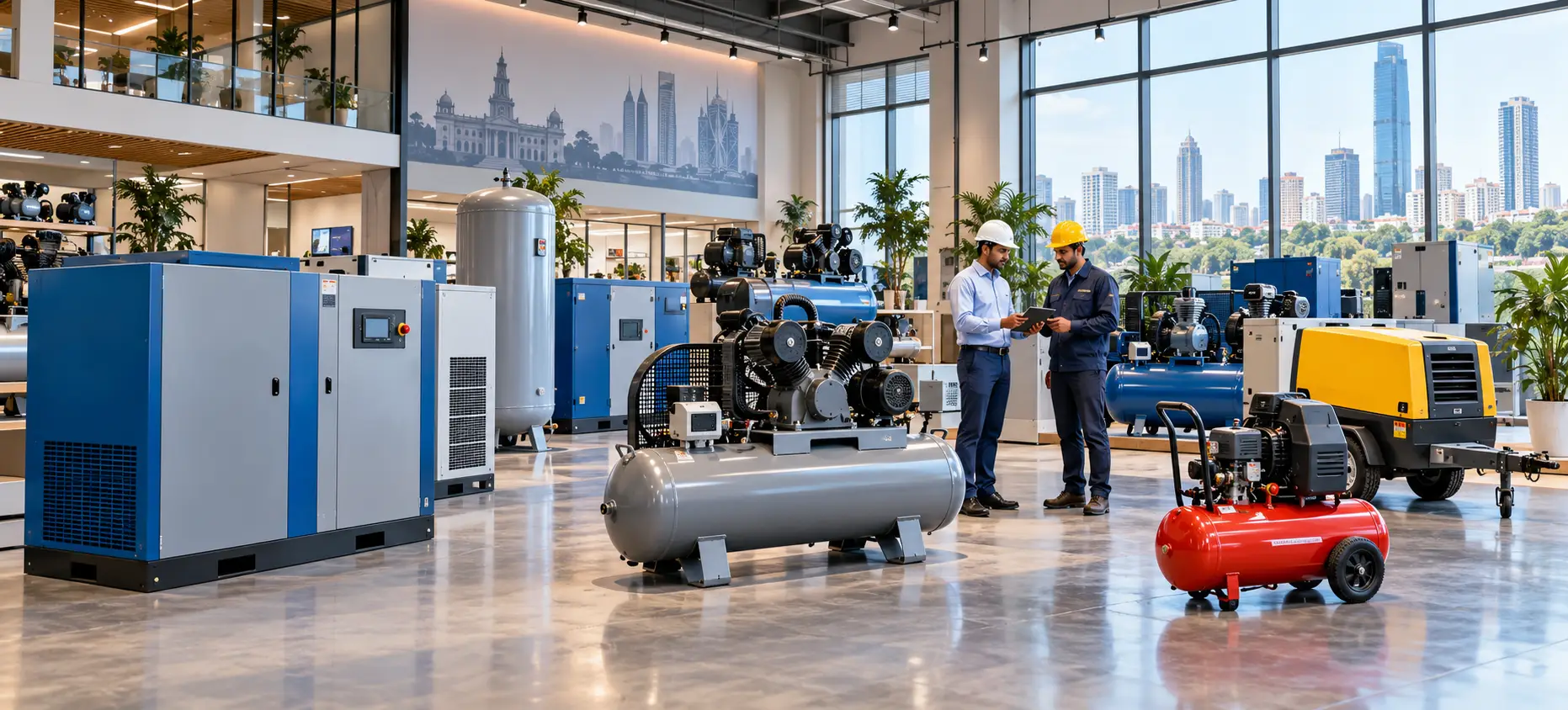
Air compressor filters perform several different jobs across an industrial compressed-air system.
Share your compressor model, filter type, airflow, pressure and application – our team will respond to your requirement.
Some filters protect the compressor itself.
Others protect the compressed-air network.
Some remove solid particles. Some are designed to capture liquid or aerosol contamination. Others form part of moisture separation or final air-treatment arrangements.
For this reason, searching for an air compressor filter can refer to very different components.
A complete industrial compressor installation may include:
Choosing the correct filter starts by identifying where the filter is located and what contamination it is expected to control.
ASG Energy Solutions supports industrial compressed-air filtration requirements involving compressor filters, air-treatment filters, dryers, separators and related compressed-air system considerations.
Share the compressor model, filter type or part details, airflow, pressure and application for filter identification and selection support.
Get Free QuoteAn industrial compressor operates by drawing atmospheric air into the machine and increasing its pressure.
Atmospheric air can contain contaminants such as:
The compressor system can also introduce or concentrate other contaminants depending on compressor technology and operating conditions.
Downstream compressed air can therefore require treatment before reaching sensitive equipment or production processes.
Filtration can help address specific contamination categories, but there is no single filter that automatically performs every treatment function.
One of the most important distinctions for buyers is the difference between compressor filters and compressed-air line filters.
These are components associated with operation and protection of the compressor.
Examples include:
These are installed in the compressed-air system to improve downstream air quality.
Examples include:
The correct component depends on the location and purpose.
An air compressor intake filter filters atmospheric air before it enters the compressor.
It can also be called:
The intake filter is the compressor's first line of protection against airborne particulate contamination.
The air compressor air filter reduces airborne particulate entering the compressor.
Without appropriate intake filtration, dust and debris can contribute to contamination and wear within compressor components.
The intake filter must also allow sufficient airflow.
A filter that becomes excessively restricted can increase intake resistance.
The air compressor intake filter element is the replaceable filtration component inside the intake filter assembly.
Depending on compressor design, the element may use engineered filter media designed for the machine's airflow requirement.
Replacement should match the compressor model and technical requirements.
Intake filters should be inspected and replaced according to the compressor's maintenance requirements and actual operating environment.
A compressor in a dusty industrial environment can face different intake conditions from one operating in a cleaner compressor room.
Possible indications requiring inspection include:
Do not judge filter condition solely from external appearance.
Whether an element can be serviced depends on its design and manufacturer instructions.
Some filter media should be replaced rather than aggressively cleaned.
Improper cleaning can:
Follow the component-specific maintenance procedure.
An air compressor oil filter is used in applicable lubricated compressor systems to filter lubricant circulating through the compressor.
It performs a different function from the intake air filter.
Its purpose is to protect the lubrication circuit and relevant compressor components from contaminants in the oil.
A compressor oil filter can help protect components by retaining applicable particulate contamination from the lubricant.
Oil-filter condition can influence:
The correct replacement filter should match the compressor model and lubricant-system requirements.
A screw compressor oil filter is a routine service component on applicable oil-injected rotary screw compressors.
It should not be confused with:
All three can be present in the same compressor system, but each has a different job.
An air compressor oil filter price depends on factors including:
For an accurate replacement enquiry, provide the compressor model, serial information where available and existing filter part number.
The air oil separator is a critical component in applicable oil-injected compressor systems.
During compression, lubricant and compressed air can form a mixture.
The separation system is designed to separate lubricant from the compressed-air stream so the lubricant can remain within the compressor circuit while compressed air proceeds downstream.
The air compressor oil separator is not the same as a downstream coalescing filter.
It is an internal or compressor-package separation component associated with applicable oil-injected compressor technology.
Searches for this component also include:
In an oil-injected screw compressor, the air-oil separator forms part of the lubricant-separation process.
Correct separator performance is important to the compressor system.
Replacement should be based on:
No.
An air-oil separator performs separation inside an applicable compressor system.
A compressed-air line filter is installed downstream to treat compressed air delivered to the plant.
The components have different functions and should not be treated as interchangeable.
Separator elements should be serviced according to equipment requirements.
Potential issues associated with separator condition can include changes in pressure differential or oil carryover, although these symptoms can also have other causes.
Correct diagnosis is important before replacing parts.
A compressed air filter is installed downstream in the compressed-air system to reduce specific contaminants before air reaches equipment or production processes.
Depending on the filter type, it may address:
Different filtration stages are selected for different contaminants.
Compressed air filtration should be viewed as a treatment process rather than simply adding one filter.
A system may require several stages.
A simplified example can be:
Additional filtration may be used according to process requirements.
A compressed air filtration system can combine multiple technologies to achieve the air condition required by the process.
Components can include:
The exact arrangement depends on the contaminants being controlled.
Water, oil and particles exist in different forms.
For example:
A filter selected for one contaminant does not automatically remove every other contaminant.
This is why industrial compressed-air treatment can require multiple stages.
A compressed air particulate filter is designed to capture solid particles from the compressed-air stream.
Applications can include:
The required filtration grade depends on the application.
The phrase air compressor particulate filter can refer to a downstream compressed-air filter intended to reduce particulate contamination.
It should be distinguished from the compressor's atmospheric intake filter.
A compressed air pre filter is installed before another treatment component.
For example, a pre-filter can be installed before an air dryer to protect it from applicable contamination.
The correct filtration type depends on dryer technology and upstream compressor conditions.
A compressed air after filter is positioned after a treatment stage.
A common example is a particulate after-filter installed downstream of a desiccant dryer to capture applicable desiccant dust.
A fine filter is used where finer particulate or aerosol control is required than provided by a more general upstream stage.
The term “fine filter” alone is not a complete technical specification.
Buyers should compare actual filtration performance and operating conditions.
A compressed air micro filter is another commercial term used for fine compressed-air filtration.
Selection should be based on documented filter performance rather than terminology alone.
Ultra-fine filtration may be used as an additional stage where a process requires enhanced contaminant control.
Increasing filtration unnecessarily can add pressure drop, so filtration should match the actual requirement.
A compressed air coalescing filter is designed to capture fine liquid aerosols.
Small aerosol droplets enter the filter media and combine into larger droplets.
These larger droplets can then drain away from the airflow.
This process is known as coalescence.
A simplified coalescing process is:
An oil coalescing filter can reduce applicable oil aerosols from compressed air.
It does not automatically remove all oil in every form.
Oil aerosol and oil vapour are different contamination categories.
If an application requires additional hydrocarbon control, further treatment may be necessary.
The phrase compressed air oil removal filter commonly refers to filtration intended to reduce oil contamination.
However, buyers should identify whether they need to address:
Different treatment technologies can be required.
An activated carbon compressed air filter can be used as part of a compressed-air treatment system where applicable vapour or odour reduction is required.
Activated carbon works differently from particulate and coalescing filtration.
It uses adsorption.
Activated carbon contains a highly developed surface structure capable of adsorbing certain compounds.
For compressed-air applications, activated-carbon treatment should be selected for the specific contaminant requirement and operating conditions.
Activated-carbon treatment should not be used as a substitute for appropriate particulate filtration.
A properly designed treatment train can use different filtration stages for different functions.
Activated-carbon filtration is not a substitute for a compressed-air dryer.
Moisture control generally requires appropriate:
depending on the required air quality.
A compressed air carbon filter can form a polishing stage in applications requiring treatment beyond normal particulate and aerosol filtration.
The complete air-quality specification should determine whether carbon filtration is required.
An air compressor water separator removes condensed liquid water from compressed air.
It can be installed after cooling, where moisture has condensed.
This component performs a different function from a dryer.
A compressed air water separator typically uses mechanical separation to remove entrained liquid droplets.
The collected liquid must then be discharged through a suitable drain arrangement.
A moisture separator can be an important first treatment stage after an aftercooler.
Cooling causes water vapour to condense.
The separator removes much of this bulk liquid before the air travels farther downstream.
An air compressor water trap is a common search phrase for equipment intended to collect or separate liquid moisture.
For industrial systems, the equipment should be selected for:
A moisture trap can help remove liquid moisture but does not necessarily reduce water vapour to the level achieved by a refrigerated or desiccant dryer.
This distinction is important.
The term air compressor water filter is frequently used by buyers searching for moisture-removal equipment.
The correct product may actually be:
depending on the form of moisture and required air quality.
An inline water separator can be installed within a compressed-air line to remove entrained liquid water.
It should be sized for actual flow and pressure.
A separator or filter that collects liquid needs a method for removing the condensate.
An automatic drain can discharge collected liquid without requiring continuous manual draining.
Drain technology and maintenance requirements vary.
A filter or separator can collect water effectively but still perform poorly if condensate is not discharged correctly.
A failed or blocked drain can lead to accumulated liquid and downstream carryover.
Drain inspection should therefore form part of compressed-air treatment maintenance.
The term oil water separator for air compressor can refer to condensate-treatment equipment.
This is different from:
A condensate oil-water separator treats collected compressor condensate before appropriate disposal according to applicable requirements.
Compressed-air condensate from applicable lubricated compressor systems can contain oil.
A condensate treatment system separates applicable oil contamination from water to support proper condensate management.
The correct handling method depends on the installation and applicable requirements.
Separates lubricant from compressed air in applicable oil-injected compressors.
Reduces applicable oil aerosols downstream.
Treats collected condensate containing water and oil.
These are three different components with three different purposes.
A compressed air line filter is installed in the downstream compressed-air piping.
It can be selected to remove specific contaminants before air reaches:
The term air line filter for compressor usually refers to a filter installed after the compressor rather than an intake filter mounted on the compressor itself.
Before ordering, identify:
An inline compressed air filter is installed directly in the compressed-air piping.
Inline filters are available for different functions and capacities.
Selection should not be based on pipe connection size alone.
A high pressure compressed air filter must be specifically rated for the intended working pressure.
The filter housing, connections, drain and element must all be appropriate for the system.
Never operate standard filtration equipment beyond its rated pressure.
“Precision filter” is a commercial term often used for fine compressed-air filtration.
When comparing products, review actual technical performance rather than relying only on labels such as:
A filter assembly normally consists of:
The housing must be rated for the compressed-air system.
The compressed air filter cartridge or element performs the actual filtration inside the housing.
A replacement cartridge must match:
Do not select a replacement only by visual dimensions.
“Air compressor filter element” can refer to several different replacement components.
Before ordering, identify whether you need:
This prevents part-selection errors.
Every compressed-air filter creates some resistance to airflow.
This produces pressure drop.
As a filter becomes loaded with contamination, differential pressure can increase.
Excessive pressure drop can affect the compressed-air system by reducing available downstream pressure.
If production equipment requires a certain pressure, the compressor may need to operate at a higher discharge pressure to overcome excessive treatment-system losses.
Differential pressure is the pressure difference between the inlet and outlet of the filter.
Monitoring differential pressure can help assess filter condition, although replacement decisions should also follow equipment-specific maintenance requirements.
A structured filter-maintenance programme can include:
Filters are consumable components.
Replacement intervals vary according to:
There is no single replacement interval that applies to every compressor filter.
Replacement should be planned before filter condition creates excessive pressure drop or compromises required air quality.
Use the correct replacement element for the filter housing and filtration grade.
Some filter types are intended for replacement rather than cleaning.
Cleaning a non-serviceable element can damage media or compromise filtration performance.
Follow the element manufacturer's instructions.
Common filter-related spare parts can include:
Provide exact equipment identification when requesting parts.
Provide:
Part number and equipment model are more reliable than appearance alone.
The keyword air compressor filter dryer can describe a compressed-air treatment arrangement combining filtration and drying.
A complete system may contain:
The dryer and filters perform different functions.
An air dryer filter can be positioned before or after the dryer depending on the treatment objective.
Protects the dryer from applicable upstream contamination.
Protects the downstream system from applicable contamination generated or remaining after the dryer.
A refrigerated dryer installation can include appropriate upstream filtration depending on compressor and process requirements.
The filter should be sized for the same operating airflow and pressure conditions as the dryer.
Desiccant dryers can require suitable pre-filtration to protect the desiccant.
A particulate after-filter can also be used to capture desiccant dust.
Filters and dryers should be selected as a system.
A simplified treatment train can be:
The exact arrangement depends on the application.
A compressed air purification system combines treatment technologies to address contaminants relevant to the process.
Potential contamination categories include:
The required treatment train depends on the desired air quality.
A complete compressed-air treatment system can include:
Not every application requires every component.
A screw compressor can contain several filters.
These may include:
Downstream treatment can then include:
The screw compressor air filter protects the compressor intake.
A restricted intake filter can increase intake resistance and should be addressed according to maintenance requirements.
The separator element in an applicable oil-injected screw compressor is responsible for separating lubricant from the compressed-air stream within the compressor package.
Use a replacement element compatible with the specific machine.
The term rotary screw compressor filter can refer to:
Identify the exact required component before requesting a quotation.
A piston air compressor filter commonly refers to the compressor intake filter.
Depending on the complete system, downstream filtration can also be installed for moisture and particulate control.
The intake filter on a reciprocating compressor helps prevent airborne debris from entering the compression cylinder.
Correct airflow is important because excessive restriction can affect compressor performance.
An oil-free compressor can still require:
“Oil-free compressor” does not mean “no filtration required.”
Compressed air used for painting or spray applications can be sensitive to:
A suitable treatment system can include:
The exact air-quality requirement depends on the painting process and equipment.
A simple water separator can remove liquid moisture but may not address all water vapour, aerosols or other contaminants.
For demanding finishing applications, evaluate the complete compressed-air treatment train.
Paint-quality problems attributed to “dirty air” can have several causes.
Before adding filters, determine whether the contamination is:
Then select the appropriate treatment.
Pneumatic tools require air at suitable pressure, flow and quality.
Point-of-use treatment can include:
Not every pneumatic application requires a lubricator.
Follow equipment requirements.
FRL commonly refers to:
The three components perform different functions.
Reduces applicable contamination.
Controls downstream pressure.
Introduces controlled lubricant where the application specifically requires it.
A pneumatic air filter is commonly installed near pneumatic equipment to protect valves, cylinders and controls from applicable contamination.
It should complement, not automatically replace, central compressed-air treatment.
A filter-regulator combines filtration with downstream pressure regulation.
Selection should consider:
CNC machines can require compressed air for:
Follow the CNC manufacturer's requirements for:
Do not assume one universal filter specification fits every CNC machine.
Laser-cutting equipment can have specific compressed-air or assist-gas requirements.
Where compressed air is used, filtration should be selected from the machine manufacturer's required:
Manufacturing plants can use compressed air throughout:
Central filtration can be combined with point-of-use treatment where individual processes require different air quality.
Pharmaceutical applications can have application-specific compressed-air quality requirements.
Filtration can address selected contamination categories, but no generic filter should be presented as automatically making compressed air suitable for every pharmaceutical process.
The complete air-quality specification must be considered.
Food production can use compressed air for:
The treatment requirement depends on how compressed air interacts with the process or product.
Beverage manufacturing can have different compressed-air requirements across utility, packaging and process applications.
Filtration should be selected according to the specific point of use.
Packaging equipment often uses pneumatic:
Correct filtration can help protect pneumatic equipment and support required process air quality.
Automotive production can use compressed air for:
Different applications within the same factory can require different filtration levels.
Textile plants can have substantial compressed-air networks serving production equipment.
Filtration should consider:
A central filtration system treats compressed air before it enters the plant distribution network.
Point-of-use filtration treats air closer to a specific machine or process.
Some systems use both.
Central treatment can address general plant requirements while additional point-of-use treatment can support more demanding applications.
Not necessarily.
The correct architecture depends on:
Adding unnecessary filters can create avoidable pressure drop and maintenance.
A filtration system should begin with four questions:
Only then should filter stages be selected.
A general industrial system might use:
This is an illustrative arrangement, not a universal design.
A system requiring low moisture can use:
The exact arrangement depends on equipment and process specifications.
An undersized filter can create excessive:
A significantly oversized filter can add unnecessary cost.
Sizing should be based on actual operating flow and pressure.
Two filters with the same pipe connection can have different:
Select by technical performance, not port size alone.
Large compressor systems require filters capable of handling the maximum expected flow.
If several compressors feed one header, consider maximum simultaneous output rather than the capacity of a single machine.
High-pressure filtration requires equipment specifically rated for the system pressure.
Do not install a standard filter housing into a higher-pressure system without confirming its rating.
Filters removing liquid aerosols can collect condensate.
The drain system should:
A failed drain can compromise filter operation.
A manual drain requires regular operator action.
An automatic drain discharges condensate according to its operating principle.
For continuously operating industrial systems, drain strategy should reflect condensate load and maintenance requirements.
Common commercial buyer searches include air compressor filter price and compressed air filter price.
There is no single air compressor filter price because the phrase can refer to many different products.
Price depends on:
For an intake filter quotation, provide:
This is more accurate than requesting a filter by compressor HP alone.
Oil-filter pricing depends on the compressor model and required filter specification.
The wrong filter can have incorrect:
Use exact machine information.
Air-oil separator pricing depends on:
Provide the existing part number where possible.
For downstream line filters, quotation information should include:
When comparing air compressor filters price in India, separate compressor service filters from downstream compressed-air treatment filters.
A quotation for an intake filter cannot be compared with a coalescing line filter because they serve entirely different functions.
Buyers also search for air compressor filter manufacturers, compressed air filter manufacturers and air compressor filter manufacturers in India.
When evaluating a filter manufacturer or product, compare:
A supplier should first identify exactly which filter the buyer needs.
Questions should include:
For businesses searching for air compressor filter suppliers in Bangalore, ASG Energy Solutions supports enquiries involving industrial compressed-air equipment, treatment and applicable replacement requirements.
Provide machine and filter details for accurate identification.
For a new compressed-air line filtration system, provide:
This information supports a more relevant filtration proposal.
Searches such as air compressor filter near me, air compressor filters near me and compressed air filter near me often indicate immediate replacement or purchasing intent.
Before ordering, confirm:
Local availability should not replace compatibility verification.
Buyers also search for:
For an Atlas Copco compressor filter enquiry, provide the compressor model, serial information and existing filter or separator part number where available.
This helps distinguish between:
Buyers also search for Kaeser filters, Kaeser air filters and Kaeser compressor filters.
For any brand-specific replacement, exact model and part identification should be confirmed before supply.
A brand search term does not by itself establish ASG Energy Solutions as an authorised dealer for that manufacturer.
Buyers also search for:
These terms reflect buyer comparison and replacement search behaviour.
Availability, compatibility and supplier status for any specific brand should be confirmed for the individual requirement.
The primary requirement is technical compatibility with the compressor or filter housing.
Consider:
Do not select replacement filters solely because they physically fit.
Replacement cost can include more than the element price.
Depending on the job, consider:
For compressor internal filters, service scope depends on the compressor model.
Price alone does not describe:
Likewise, a higher-priced filter is not automatically better.
Compare technical suitability first.
The best air compressor filter is the correct filter for the specific function.
Select the correct intake element for the compressor.
Use the correct oil filter for the compressor's lubrication system.
Use the correct separator element for the compressor design.
Select an appropriate coalescing filter.
Select the required particulate filtration grade.
Use suitable moisture separation.
Use a dryer rather than relying on a line filter alone.
Evaluate activated-carbon filtration where required.
An intake filter and coalescing filter have completely different functions.
Flow and pressure matter.
A highly restricted filter can affect the entire system.
A separator removes liquid water, not all water vapour.
Dryers and filters perform complementary functions.
Collected liquid must be discharged.
Unnecessary filtration can add pressure drop and maintenance.
Use model and part information.
Temperature, pressure and airflow affect filtration performance.
Carbon treatment addresses specific contamination and does not replace drying or particulate filtration.
Record:
Determine whether it is:
Determine whether the problem involves:
Determine what downstream equipment or process requires.
Size treatment equipment for relevant maximum flow.
Verify both normal and applicable maximum pressure.
Air temperature can affect downstream treatment requirements.
Inspect:
Determine whether the system uses:
Protect downstream equipment according to system requirements.
Address water vapour where required.
Control applicable downstream particulate or other contamination.
Consider every treatment component together.
Ensure collected liquids can be removed.
Add local filtration only where the process requires it.
Define element replacement and drain inspection requirements.
Confirm replacement filters against equipment model and specifications.
Account for planned compressor additions or production growth.
Correct filtration can support:
The actual benefit depends on correct system design and maintenance.
Filter selection should begin with the compressor and system operating conditions.
Requirements can involve intake filters, oil filters, separator elements, line filters, coalescing filters, particulate filters and other compressed-air treatment components.
Filters and dryers perform different but complementary roles.
The filtration requirement can be evaluated around the process rather than selecting components only from generic descriptions.
Compressor model, filter model and part information can be used to identify the required replacement.
Filtration can be considered alongside:
ASG Energy Solutions supports enquiries from industrial businesses seeking compressed-air filtration and related compressor solutions in Bangalore and surrounding markets, subject to confirmation of the specific requirement and location.
An air compressor filter can refer to a compressor intake filter, oil filter, separator element or downstream compressed-air filter depending on its location and function.
It filters atmospheric intake air before it enters the compressor.
It helps reduce dust and particulate contamination entering the compressor.
It is the filter installed at the compressor air inlet.
No. An intake filter treats atmospheric air entering the compressor. A line filter treats compressed air downstream.
It filters lubricant circulating through applicable lubricated compressor systems.
It separates lubricant from compressed air within applicable oil-injected compressor systems.
No. The oil filter cleans lubricant, while the separator separates lubricant from the compressed-air stream.
It is downstream treatment equipment designed to reduce specific contaminants from compressed air.
Depending on filter technology, they can address particles, liquid droplets and aerosols. Other contaminants may require specialised treatment.
It captures solid particulate contamination.
It is designed to capture fine liquid aerosols by coalescing small droplets into larger droplets that can drain away.
It is a coalescing filter used to reduce applicable oil aerosols from compressed air.
Oil aerosol and oil vapour are different. Additional treatment can be required where vapour reduction is specified.
It uses activated carbon adsorption as part of treatment for applicable vapour or odour requirements.
No.
Some filters or separators can remove liquid droplets, but water vapour normally requires drying technology.
It separates condensed liquid water from compressed air.
No. A separator removes liquid water. A dryer controls water vapour.
It is a common term for equipment collecting or separating liquid moisture from compressed air.
It separates entrained liquid moisture from the compressed-air stream.
Atmospheric air contains water vapour. Compression and subsequent cooling can cause moisture to condense.
Not necessarily. A suitable air dryer is normally required when the process requires control of water vapour.
It is a filter positioned before another treatment component, such as an air dryer.
It is a filter positioned after another treatment component.
An appropriate particulate after-filter can capture desiccant dust.
Filtration requirements depend on the compressor, dryer and process specification.
The phrase usually refers to a compressed-air treatment arrangement combining filtration and drying.
It is a filter installed directly in the compressed-air piping.
It is a filter specifically designed and rated for higher-pressure compressed-air applications.
Only if its documented working-pressure rating is suitable. Never exceed the filter housing rating.
It is the reduction in pressure as compressed air passes through the filter.
Element contamination or excessive airflow can contribute to increased differential pressure.
Excessive pressure loss can reduce the pressure available to downstream equipment.
Not automatically. Select filtration according to the required air quality because unnecessary stages can add pressure drop and maintenance.
Use actual airflow, operating pressure, temperature and required filtration performance.
Actual delivered airflow and operating conditions provide a better basis than HP alone.
Yes, if the central filter is properly sized for the maximum simultaneous airflow and operating conditions.
It can create excessive pressure drop and may operate outside its intended flow conditions.
Some sizing margin can be appropriate, but unnecessary oversizing increases cost.
Replacement depends on filter type, operating hours, contamination and equipment-specific requirements.
Only if the filter design and manufacturer instructions permit the specific cleaning method.
Many coalescing elements are replacement components rather than routinely cleaned filters. Follow the filter manufacturer's requirements.
Maintenance intervals, differential pressure, operating condition and air-quality performance can all be relevant.
Provide compressor manufacturer, model, serial number where available and filter part number.
Provide airflow, pressure, pipe size, filtration requirement and application.
FRL means filter, regulator and lubricator.
The treatment requirement depends on the pneumatic equipment and process.
No. Follow the tool manufacturer's requirements.
The treatment system depends on the required control of water, aerosols, particles and other contamination for the specific painting process.
Not necessarily. More complete moisture and contamination control may be required.
Follow the machine manufacturer's specified compressed-air pressure, flow and air-quality requirements.
Follow the laser system manufacturer's specified compressed-air or assist-gas requirements.
Applicable machines can use an intake filter, oil filter and air-oil separator, plus downstream compressed-air treatment filters.
A piston compressor commonly has an intake filter, while downstream filtration depends on the application.
Yes. Oil-free compression does not eliminate requirements for intake filtration, moisture control, particulate filtration or process-specific treatment.
It generally refers to an air-oil separator element in an applicable lubricated compressor.
It is the replaceable filtration element installed within a filter housing.
No. Match the cartridge to the housing, filtration grade and operating requirements.
It can refer to the complete filter housing and element or a compressor-specific filter assembly.
It is a combination of treatment technologies selected to control contaminants according to the process requirement.
It is a filtration and treatment arrangement sized for industrial compressor airflow, pressure and air-quality requirements.
Filtration usually refers to removal of specific contaminants using filters. Purification can describe the broader treatment process involving filters, dryers and other equipment.
Price depends on filter type, compressor model, airflow, pressure, filtration grade and component specification.
Pricing varies significantly between intake filters, oil filters, separator elements and industrial line filters. Exact equipment information is required for a relevant quote.
Provide the compressor model or compressed-air system specifications to obtain a relevant quotation.
Compare compatibility, filtration performance, flow rating, pressure rating, pressure drop and replacement requirements.
Provide the compressor or filter model, part number and application so the required component can be identified accurately.
ASG Energy Solutions can evaluate filter enquiries using available compressor model, filter information, operating conditions and application requirements.
Before requesting a quotation, collect the following information.
Contains atmospheric moisture and airborne particles.
Reduces particulate entering the compressor.
Raises air pressure.
For applicable lubricated compressor technology:
Filters lubricant circulating through the compressor.
Separates lubricant from the compressed-air stream inside the compressor package.
Reduces compressed-air temperature.
Cooling causes part of the water vapour to condense.
Removes bulk liquid droplets.
Discharges collected condensate.
Provides compressed-air storage and supports system operation according to design.
Reduces applicable upstream contamination.
Controls water vapour according to required pressure dew point.
Controls applicable downstream particulate contamination.
Can include specialised fine or activated-carbon filtration according to the process requirement.
Treated compressed air moves through the facility.
Additional local treatment can be installed for specific equipment.
Receives compressed air at the required pressure, flow and treatment level.
Air Compressor Filters and Compressed Air Filtration Solutions
The correct air compressor filter depends on what you need to protect and what contamination you need to control.
For a compressor maintenance requirement, identify:
For a compressed-air filtration project, identify:
ASG Energy Solutions can use this information to evaluate the relevant compressor filter, replacement element or compressed-air treatment requirement.
Enquire for:
For faster identification, include the compressor or filter model, part number, airflow, pressure and application with your enquiry.

